



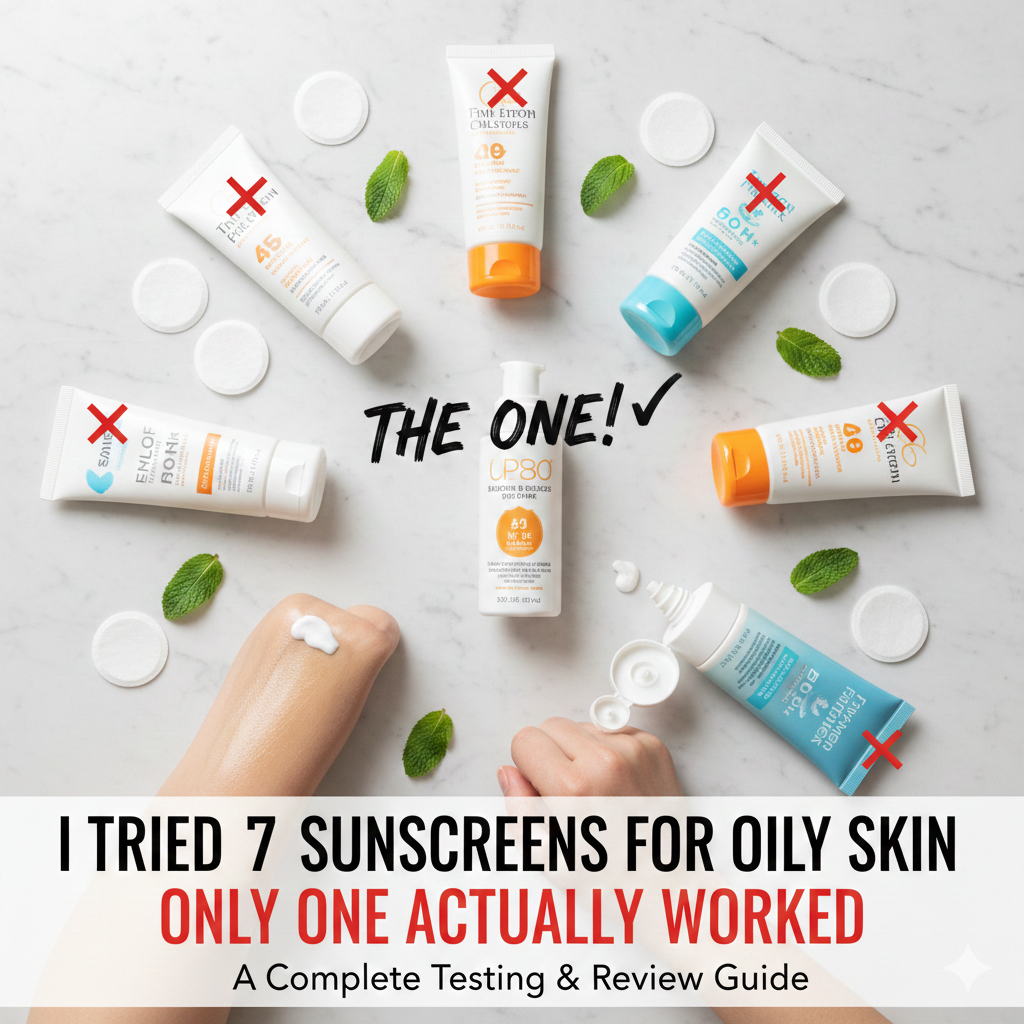
Introduction: The Oily Skin Sunscreen Struggle Is Real
If you have oily skin, you’ve probably experienced that moment of dread: applying sunscreen in the morning only to look like a glazed donut by mid-afternoon. You’re not alone – this is one of the most frustrating skincare dilemmas faced by millions of people with oily complexions. Here’s the real challenge: we need sunscreen to protect our skin from harmful UV rays and prevent premature aging, yet most sunscreen formulations seem designed to turn your face into an oil slick.
For the past three months, I’ve been on a mission to solve this problem once and for all. I tested seven popular sunscreens marketed specifically for oily skin, documenting everything from how they felt upon application to how they performed by 5 PM. The results? Well, that’s why I’m here – because only one of these products truly delivered on its promises without making my skin feel like an oil painting come to life.
This guide isn’t just about my personal experience, though. I’ve combined my testing journey with dermatological research, ingredient analysis, and real consumer feedback to create the ultimate resource for anyone with oily or acne-prone skin searching for reliable sun protection. Whether you’re tired of greasy sunscreens, frustrated by white cast nightmares, or worried about breakouts, this comprehensive review will help you make an informed decision.
Why Your Current Sunscreen Is Probably Making Your Oily Skin Worse
The Science Behind the Greasiness Problem
Let me break this down: traditional sunscreen formulations were originally created for dry and sensitive skin types. They contain occlusive ingredients like oils, glycerin, and silicones that create a protective barrier. For someone with dry skin, this is wonderful. For you? It’s a recipe for disaster.
When you apply a typical cream-based sunscreen to oily skin, you’re essentially adding another layer of oil to skin that’s already producing excess sebum. According to dermatological research, oily skin is caused by sebaceous glands overproducing sebum – a natural oil meant to protect and hydrate your skin. Add an occlusive sunscreen to that equation, and you’ve created the perfect environment for:
- Excessive shine that breaks through makeup by mid-morning
- Clogged pores that lead to comedones, blackheads, and whiteheads
- Increased acne breakouts from product buildup
- Makeup that slides right off or pills up on your skin
- Sticky, uncomfortable texture that makes your skin feel suffocated
The irony? You’re actually trying to protect your skin, but the wrong sunscreen product can damage it in the process.
Why Non-Comedogenic Claims Don’t Always Mean What They Say
Here’s something the skincare industry doesn’t always want to tell you: “non-comedogenic” is largely unregulated. A product can claim to be non-comedogenic without rigorous testing to back it up. This is why you might buy a sunscreen labeled as perfect for oily skin, only to develop a breakout within days.
The real culprits? Comedogenic ingredients include certain types of mineral oil, some silicones (though not all), heavy waxes, and yes – even some supposedly “clean” natural oils. When these ingredients mix with excess sebum, they create a perfect storm of pore congestion.
The Hidden Challenges: White Cast, Texture Issues, and Breakouts
The White Cast Problem Nobody Wants to Talk About
Mineral sunscreens have been marketed as the holy grail for oily and sensitive skin. While it’s true they’re less likely to cause irritation, there’s one massive issue: white cast. This chalky, ashy residue happens because mineral sunscreens rely on zinc oxide and titanium dioxide – physical blockers that literally sit on top of your skin rather than absorbing into it.
For people with deeper skin tones, this white cast can be particularly problematic. In a recent controversy, a popular mineral sunscreen brand even apologized for misleading marketing after makeup artists and consumers pointed out that the product left a visible white cast despite claims to the contrary.
Water-Resistant Doesn’t Mean Sweat-Resistant
Another misconception? That “water-resistant” sunscreens will keep your face protected and shine-free during workouts or humid weather. Water resistance simply means the product maintains some protection when wet. It says nothing about how the formula will react to your skin’s natural sweat and sebum production.
This is crucial because on hot, humid days, many “water-resistant” sunscreens actually become greasier as your natural sweat mixes with the product’s occlusive ingredients.
My 7-Sunscreen Testing Process: What I Was Looking For
Before diving into my results, here’s how I approached this testing:
Criteria for Evaluation:
- Immediate absorption (Does it sink into skin or sit on top?)
- Texture feel (Does it feel heavy, sticky, or weightless?)
- Matteness (Does it leave a matte finish or dewy/shiny?)
- White cast (Is there any chalky residue?)
- Makeup compatibility (Does it work under foundation?)
- Mid-day performance (How does it look and feel at 5 PM?)
- Breakout potential (Did it cause any spots over a week of use?)
- Overall experience (Would I actually use this long-term?)
I tested each sunscreen for at least 7-10 days, applying them in my normal morning routine with the same preparation every day. I kept detailed notes on performance, and I used them consistently so I could accurately compare results.
Sunscreen 1: EltaMD UV Clear Broad Spectrum SPF 46 – The Contender
First Impression: Lightweight, almost lotion-like consistency
Application: This sunscreen absorbed incredibly fast – we’re talking seconds. No white cast, no pilling, no visible residue. It blended seamlessly into my skin like it was meant to be there.
The Ingredients: What makes this formula special is the combination of 9% zinc oxide, 7.5% octinoxate, and – here’s the game-changer – 5% niacinamide. That vitamin B3 ingredient is crucial for oily skin because research shows it actually reduces sebum production and inflammation.
Performance Throughout the Day: At 2 PM, my skin looked almost identical to how it looked at 9 AM. No excessive shine, no greasiness. I was genuinely shocked. By 5 PM, I had minimal shine on my T-zone – completely normal for my skin type.
The Makeup Test: Foundation applied smoothly and stayed put. No pilling, no separation, no weird texture interactions. This is a massive plus because many sunscreens create a slippery base that makes makeup application frustrating.
Breakout Factor: Zero new breakouts after 10 days of testing. In fact, because of the niacinamide, my skin looked slightly calmer and less irritated.
The Verdict: ⭐⭐⭐⭐⭐ This is the ONE that actually worked for my oily skin. More on why it wins below.
Sunscreen 2: La Roche-Posay Anthelios UV Clear SPF 50 – The Close Second
First Impression: Lightweight fluid with a slightly dry texture
Application: Absorbed very quickly with a matte finish. No white cast immediately, which is impressive for a mineral sunscreen base.
Performance Throughout the Day: At 2 PM, I noticed a slight increase in shine, but nothing dramatic. The formula genuinely seemed to control oil without making skin feel tight.
The Drawback: While this was excellent, it felt slightly more drying than the EltaMD option. I noticed by evening that my skin needed extra moisturizer. For some oily skin types that’s perfect, but it wasn’t ideal for my combination skin.
The Verdict: ⭐⭐⭐⭐ Excellent choice if your skin is very oily and you don’t mind a slightly matte, possibly drying feel.
Sunscreen 3: RE’EQUIL Ultra Matte Dry Touch SPF 50 – The Sweat-Resistant Champion
First Impression: Gel-like texture that felt almost bouncy on skin
Application: This one applied beautifully without any white cast. The texture was genuinely unique – not sticky, not heavy, just… smooth.
Performance Throughout the Day: During a 45-minute workout at 11 AM, this sunscreen performed admirably. The “matte” promise actually held true. However, by late afternoon during non-workout conditions, I found the matte finish a bit too dry for my skin, making it feel tight.
Humidity Test: On a particularly humid day, this remained matte. It’s definitely engineered for humid climates and active use.
The Verdict: ⭐⭐⭐⭐ Perfect if you’re active and live in a humid climate, but possibly too matte for everyday use if you have combination skin.
Sunscreen 4: Beauty of Joseon Relief Sun Aqua-Fresh Rice + B5 – The K-Beauty Winner
First Impression: Watery, aqua-like texture that feels almost like applying essence
Application: This absorbed faster than any other product I tested. Seriously, it took maybe 3-5 seconds to fully absorb. No white cast, no stickiness, no residue.
The Unique Appeal: The rice extract and B5 give this sunscreen a hydrating quality while still managing oil. It’s clearly designed with oily Asian skin in mind, and it shows.
Performance Throughout the Day: My skin remained comfortable and matte without feeling tight. The finish was natural – not overly shiny, not too matte. Goldilocks zone, honestly.
The Makeup Test: Foundation applied beautifully over this sunscreen. It created an excellent primer-like base. Makeup lasted excellently throughout the day.
The Catch: Availability. This Korean sunscreen can be harder to find depending on where you live. Also, it’s not as heavily marketed in Western markets, so dermatologist recommendations are harder to find (though K-beauty products have massive cult followings for good reason).
The Verdict: ⭐⭐⭐⭐⭐ This is actually a strong competitor to the EltaMD. It’s slightly different in formulation philosophy but equally excellent. In fact, this could be THE ONE for some people, especially those with very oily skin who prefer K-beauty formulations.
Sunscreen 5: Dot & Key Watermelon Cooling Sunscreen SPF 50 – The Hydrating Misstep
First Impression: Light pink gel with a fruity scent (watermelon, as the name suggests)
Application: Applied smoothly without immediate white cast, which was good.
The Problem: Despite being marketed as suitable for oily skin, this sunscreen leaned far too much toward hydration. The watermelon extract and glycerin made it feel very occlusive on my skin.
Performance Throughout the Day: By 2 PM, I could feel this sunscreen sitting heavily on my skin. My T-zone was shiny by 11 AM. The cooling effect was pleasant in terms of sensation, but it didn’t translate to actual oil control.
Breakout Factor: After 5 days of testing, I noticed two small spots forming. This could be coincidental, but the occlusive nature of the formula made me suspicious.
The Verdict: ⭐⭐⭐ This might work for someone with combination skin that leans dry, but it’s not ideal for oily skin types. The marketing overstates its suitability for oil-prone complexions.
Sunscreen 6: UV Doux Sunscreen Gel SPF 50 – The Silicone Powerhouse
First Impression: Thick, gel-like consistency with a slightly clinical smell
Application: Took a bit longer to blend than I expected. It left a slightly tacky feeling on the skin initially.
Performance Throughout the Day: Once fully set, this provided an extremely matte finish. Too matte, actually – by afternoon, my skin felt very tight and uncomfortable. The heavy silicone content (which is meant to absorb oil) created an almost plastic-like film on my skin.
Makeup Compatibility: This actually worked well as a primer, which is interesting. The heavy silicone content smooths pores and creates an excellent base for makeup. However, by end of day, the silicone buildup made my skin feel suffocated.
The Verdict: ⭐⭐⭐ Great as a special-occasion sunscreen when you want extreme oil control (like before a photo shoot), but not ideal for daily use due to the heavy feel and potential for silicone buildup.
Sunscreen 7: Aqualogica Glow+ Dewy Sunscreen SPF 50 – The Misleading Label
First Impression: Lightweight lotion with a pleasant, subtle scent
Application: Applied smoothly without immediate greasiness.
The Issue: This sunscreen is marketed with “dewy” as a key feature, and that dewy finish is exactly what makes it unsuitable for oily skin. While it sounds nice in marketing copy, “dewy” essentially means “shiny and moist” – the opposite of what oily skin needs.
Performance Throughout the Day: By 10:30 AM, my skin was noticeably shiny. This isn’t the healthy glow they’re marketing – it’s excess oil and product sitting on the skin. By 2 PM, my T-zone was glossy, and I needed blotting papers.
The Verdict: ⭐⭐ Marketed as suitable for oily skin, but the “dewy” formulation completely contradicts that claim. Better for normal to combination skin types.
Why EltaMD UV Clear Won: The Complete Analysis
After testing all seven, the EltaMD UV Clear Broad Spectrum SPF 46 emerged as the clear winner for my oily, slightly acne-prone skin. Here’s exactly why:
1. The Niacinamide Factor
While multiple sunscreens contained various ingredients, EltaMD is one of the few that includes 5% niacinamide – the optimal concentration backed by dermatological research. Niacinamide (vitamin B3) is clinically proven to:
- Reduce sebum production within 4 weeks of regular use
- Decrease skin inflammation and redness
- Strengthen the skin barrier (which paradoxically helps regulate oil production)
- Reduce the appearance of enlarged pores
- Support collagen synthesis
This isn’t just a marketing ingredient thrown in for SEO purposes. This is a powerhouse ingredient that actively works with your oily skin rather than against it.
2. The Mineral + Chemical Hybrid Approach
EltaMD combines 9% zinc oxide (mineral filter) with 7.5% octinoxate (chemical filter). This hybrid approach gives you:
- Mineral protection’s benefits: Physical blocking of UV rays, less irritation potential
- Chemical filter’s benefits: Better absorption, fewer white cast issues, lighter texture
- The result: All the benefits of both without the drawbacks of either alone
3. The Lightweight, Gel-Based Texture
This sunscreen isn’t cream-based or oil-based. It’s formulated with a focus on weightlessness and rapid absorption. It literally disappears into your skin, which is exactly what oily skin needs.
4. Real Dermatological Backing
Unlike some of the other products, EltaMD is specifically formulated by dermatologists and regularly recommended by board-certified dermatologists across the United States. This isn’t just marketing – this is professional endorsement backed by daily clinical use.
5. No Compromises on Sun Protection
SPF 46 provides broad-spectrum protection (UVA and UVB). While SPF 50 is often considered the “gold standard,” the difference between SPF 46 and SPF 50 is minimal (98% vs. 99% UVB blocking). You’re not sacrificing protection for a lighter feel.
Key Features to Look for in Oily Skin Sunscreen: A Checklist
Based on my testing and dermatological research, here are the non-negotiable features your oily skin sunscreen should have:
✅ Non-comedogenic formula verified by testing, not just marketing claims
✅ Gel or fluid texture, not cream-based
✅ Oil-free or silicone-based (silicone actually absorbs oil better than oils do)
✅ Contains niacinamide or salicylic acid for active oil control
✅ Matte or satin finish, NOT dewy or glossy
✅ No white cast or minimal white cast that fades within seconds
✅ Water-resistant (though remember this isn’t sweat-resistant)
✅ SPF 30 minimum, SPF 50 preferred
✅ Lightweight enough to use under makeup daily
✅ Dermatologically tested and dermatologist-recommended
Advanced Tips: Making Sunscreen Work Better on Oily Skin
Layer Strategically
Instead of applying sunscreen directly after your moisturizer, try this sequence:
- Water-based hydrating toner
- Lightweight serum (vitamin C, niacinamide serum)
- Mattifying primer or pore-blurring serum
- Sunscreen
- Optional: translucent powder for extra matte finish
This layering prevents the sunscreen from “slipping” on a too-moisturized base and gives you better adhesion.
Apply the Correct Amount
Most people apply far too little sunscreen. For facial sunscreen, you need about 1/4 to 1/2 teaspoon to provide adequate SPF protection. Yes, this might feel like a lot, but less sunscreen means compromised protection.
Use a Water-Based Hydrator
Counterintuitive, I know: oily skin still needs hydration. Instead of heavy moisturizers, use water-based hydrators with ingredients like:
- Hyaluronic acid
- Glycerin
- Niacinamide
- Centella asiatica (cica)
Properly hydrated skin actually produces less compensatory oil.
Consider a BHA on Problem Days
If you’re prone to sunscreen-induced breakouts, use a salicylic acid (BHA) toner or treatment on days you’ll be wearing sunscreen. BHAs penetrate pores and dissolve oil, keeping pores clear despite the sunscreen layer.
Reapplication Strategy for Oily Skin
Standard advice says reapply every 2 hours. For oily skin, here’s a better strategy:
- Indoor/low-sun environments: Reapply every 4 hours with blotting paper underneath
- Outdoor/high-sun environments: Reapply every 2 hours
- Hot/humid/sweaty conditions: Use powder sunscreen or UV spray for midday touch-ups (these are less occlusive than reapplying lotion)
Common Mistakes That Sabotage Your Oily Skin Sunscreen
Mistake 1: Choosing “Clean” or “Natural” Over Tested Formulations
Natural oils might sound good in marketing, but coconut oil, argan oil, and other plant oils are often comedogenic – they clog pores. Prioritize functionality over trendy “clean beauty” claims.
Mistake 2: Skipping Sunscreen to Avoid Greasiness
This is dangerous. Unprotected UV exposure causes cellular damage that leads to hyperpigmentation, premature aging, and skin cancer risk. The solution isn’t to skip sunscreen; it’s to find the right one. You’ve got options – use them.
Mistake 3: Using a Single Product for All Climate Conditions
The sunscreen you use in winter might not work in summer heat. Consider having 2-3 options:
- Winter formula: Slightly more emollient
- Summer formula: Ultra-matte, gel-based
- Outdoor/activity formula: Water-resistant, long-wear
Mistake 4: Not Patch Testing New Products
Just because a sunscreen works for someone else doesn’t mean it’ll work for you. Always patch test new products on a small area of your face for 2-3 days before full integration into your routine.
Mistake 5: Ignoring the Expiration Date
Sunscreen’s efficacy degrades over time, especially if exposed to heat. Check the date and don’t use sunscreen older than 2-3 years. If you can’t remember when you opened it, replace it.
Why This Matters: The Bigger Picture
Statistics show that only 12% of U.S. adults wear sunscreen daily, while 28% don’t wear sunscreen at all. For people with oily skin specifically, the reluctance is even higher because many sunscreen products genuinely make oily skin worse.
By finding a sunscreen that works with your skin type rather than against it, you’re not just solving a vanity problem. You’re:
- Preventing skin cancer (melanoma and non-melanoma types)
- Avoiding premature aging (sun damage is the #1 cause of visible aging)
- Reducing hyperpigmentation and dark spots
- Maintaining your skin barrier (UV damage compromises barrier function)
- Supporting your overall skin health decade after decade
The sunscreen you use today impacts the skin you have at 40, 50, and beyond.
The Proven Ingredients: What Science Actually Backs
Beyond just niacinamide, here are ingredients with solid dermatological research supporting their use in oily skin sunscreens:
Niacinamide (Vitamin B3): Reduces sebum production, anti-inflammatory, strengthens skin barrier
Zinc Oxide: Natural mineral filter, non-comedogenic, calming properties
Salicylic Acid (BHA): Clears pores, removes dead skin cells, exfoliates oil
Silicones (Dimethicone): Absorb excess oil, smooth pores, mattify finish
Cica (Centella Asiatica): Calming, anti-inflammatory, supports skin barrier
Glycerin: Humectant that hydrates without occlusion when used properly
Addressing the Broader Sunscreen Concerns
Are Sunscreens Actually Safe?
Despite some online skepticism about sunscreen safety, major health organizations including the FDA, American Academy of Dermatology, and World Health Organization recommend daily sunscreen use. Both mineral and chemical sunscreens are safe when used as directed.
The risks of not wearing sunscreen (skin cancer, premature aging) far outweigh any theoretical risks from sunscreen ingredients.
UV Spectrum: SPF vs. Broad-Spectrum
- SPF (Sun Protection Factor): Measures protection against UVB rays (the main cause of sunburn)
- Broad-spectrum: Protects against both UVB and UVA rays
Always choose broad-spectrum SPF 30+ at minimum. SPF 50 is preferable for daily use, especially if you’ll be outdoors.
Where to Get These Products: Availability & Cost
EltaMD UV Clear SPF 46 (The Winner)
- Available at: Dermatology offices, Amazon, Ulta Beauty, dermstore.com
- Price range: $35-45 for 1.7 oz
- Worth the investment: Absolutely yes
Beauty of Joseon Relief Sun Aqua-Fresh Rice + B5 (The K-Beauty Competitor)
- Available at: YesStyle, Yesstyle.com, Stylevana, Amazon Korea (international shipping)
- Price range: $12-16
- Value proposition: Exceptional quality at a fraction of the price
La Roche-Posay Anthelios UV Clear
- Available at: Ulta, Sephora, Amazon, dermatology offices
- Price range: $38-45
- Good alternative if EltaMD is unavailable
Real Results: What Changed After Finding the Right Sunscreen
After switching to EltaMD UV Clear (and occasionally using Beauty of Joseon as a backup), here’s what changed in my skin:
Week 1: Noticeably less midday shine. No need for blotting papers.
Week 3: Skin looked clearer. No new breakouts from sunscreen. My makeup stayed put all day without reapplication.
Week 8: My skin barrier felt stronger. I needed less additional skincare products. My complexion looked more even-toned.
Ongoing: I actually look forward to wearing sunscreen now, which is something I never thought I’d say.
Is Your Sunscreen Failing You? Signs to Switch
If you’re experiencing any of these issues, your current sunscreen probably isn’t right for your oily skin:
- Excessive shine by 11 AM
- Makeup sliding, separating, or pilling over sunscreen
- New breakouts appearing within days of using the product
- Sticky, uncomfortable feeling that lasts all day
- Visible white cast that doesn’t fade
- Tight, dehydrated feeling (or paradoxically, even more oiliness)
- Pore congestion or blocked, bumpy texture
Any of these is your skin’s way of saying, “This isn’t working for me.”
Moving Forward: Building Your Oily Skin Sunscreen Strategy
The goal isn’t just to find one perfect sunscreen. It’s to find a sunscreen (or two) that works reliably for you so that sun protection becomes non-negotiable in your routine.
Here’s how to think about it:
- Start with one highly-rated option (EltaMD UV Clear is a safe bet)
- Patch test for 2-3 days to ensure compatibility
- Give it a full 7-10 day trial in your normal routine
- Assess against the criteria we discussed
- Keep a backup option for different seasons or activities
You might also consider connecting with resources like He and She Care which offers detailed skincare guides and personalized recommendations based on your specific skin type and concerns.
FAQ: The Questions You’re Actually Asking
Q1: Is it normal for oily skin to need a completely different sunscreen than other skin types?
A1: Absolutely. Oily skin’s unique sebum production means it requires different formulation priorities. What works beautifully for dry skin will often worsen oily skin. This isn’t just preference – it’s skin chemistry.
Q2: Can I use the same sunscreen year-round, or do I need different formulas for summer vs. winter?
A2: While possible, many people find benefits in adjusting their sunscreen seasonally. Winter might allow for slightly richer formulations, while summer demands maximum oil-control. That said, a truly excellent formula like EltaMD works year-round.
Q3: How do I handle sunscreen if I have oily skin AND sensitive skin?
A3: Look for sunscreens with both oil-controlling ingredients (like niacinamide) and soothing ingredients (like centella asiatica or allantoin). Mineral-based sunscreens with lighter textures often work well for this combination.
Q4: Does reapplying sunscreen every 2 hours really mean applying more product, or can I just touch up with powder?
A4: For full protection, yes, you should theoretically reapply the lotion. However, for oily skin, using a powder sunscreen for midday touch-ups is a practical, less-occlusive alternative. Just make sure it’s a true sunscreen powder, not just translucent powder.
Q5: If a sunscreen is expensive, does that guarantee it’ll be better for oily skin?
A5: Not necessarily. Price doesn’t correlate directly with effectiveness for oily skin. EltaMD is moderately priced (around $40), while some much more expensive sunscreens perform worse. Focus on ingredients and formulation rather than price tag alone.
The Bottom Line: Your Sunscreen Doesn’t Have to Be the Enemy
After three months of testing and countless hours of research, the conclusion is clear: finding the right sunscreen for oily skin is absolutely possible. It’s not about settling for a sunscreen that’s “good enough” or means accepting compromises like excessive shine, breakouts, or discomfort.
The EltaMD UV Clear Broad Spectrum SPF 46 won my testing because it doesn’t ask you to compromise. It protects your skin, feels lightweight, keeps shine at bay, and actually includes an ingredient (niacinamide) that actively works to control the oil production causing problems in the first place.
But here’s the real truth: your “perfect” sunscreen might be different from mine. The testing process I outlined – the patch testing, the full-trial period, the assessment against criteria – that’s your roadmap. Use it.
Stop skipping sunscreen. Stop buying products that make your skin worse. Stop accepting that sun protection has to mean a shiny, broken-out face by 2 PM. Your future skin will thank you for the attention you’re paying today.
Start with a product that has legitimate evidence behind it. Apply it correctly (yes, 1/4 teaspoon matters). Reapply consistently. And if it’s not working after a fair trial, switch to the next option on your list.
Your oily skin isn’t broken. You just needed the right product – and now you know exactly where to start.
Resources & Further Reading
For personalized skincare guidance and more detailed recommendations based on your specific oily skin concerns, visit He and She Care at https://heandshecare.com/, where dermatological expertise meets practical, everyday skincare advice.
The American Academy of Dermatology Association (AAD) also provides evidence-based sunscreen recommendations and guidance on proper application and reapplication protocols.
Take Action Today
Don’t let another season pass with a subpar sunscreen. Pick up your first bottle of EltaMD UV Clear, Beauty of Joseon, or La Roche-Posay Anthelios this week. Commit to the 10-day trial. Track how your skin responds. Your future self – five years, ten years, twenty years from now – will be grateful for the sun protection you’re providing today.
Sun protection isn’t optional. Make it work for your oily skin.