



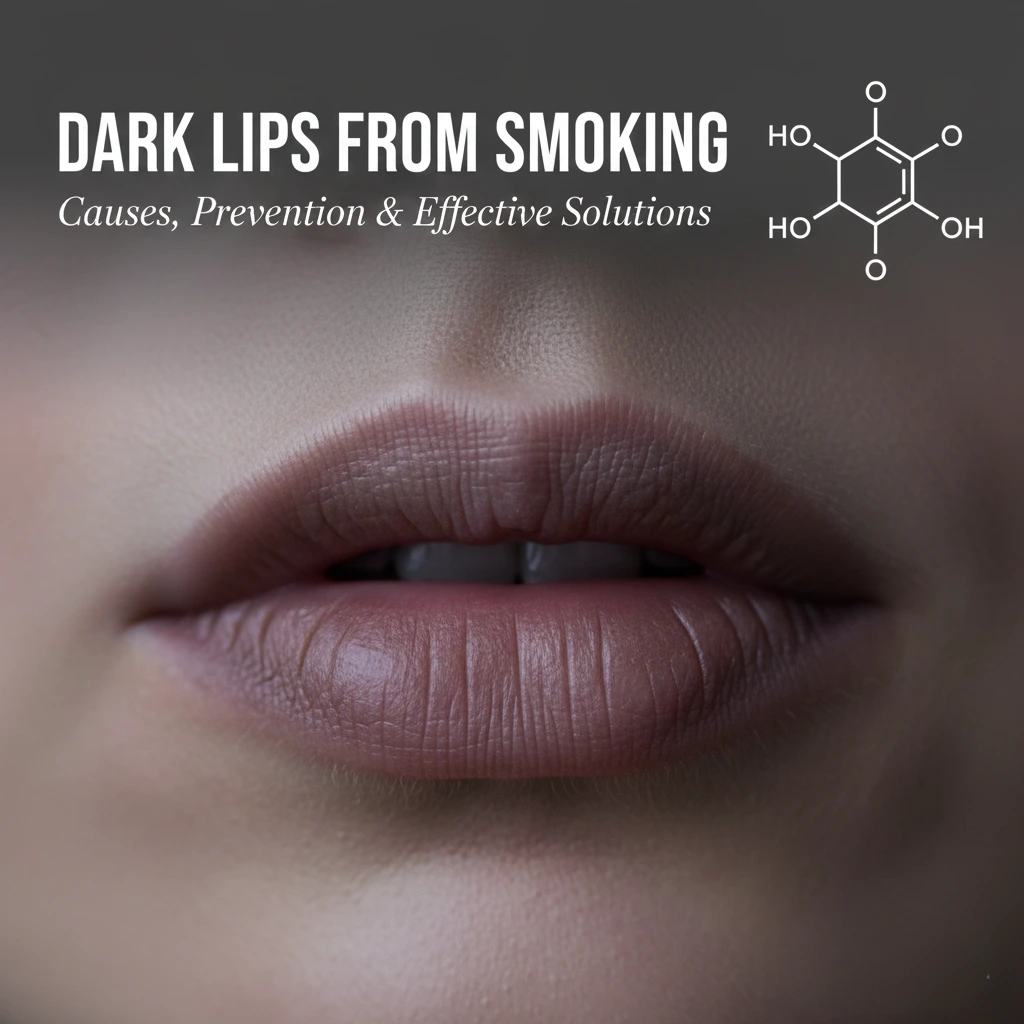
Dark Lips from Smoking: Causes, Prevention & Effective Solutions
Are your lips darker than you’d like them to be? If you’re a smoker or recently quit, you’re not alone. In fact, almost every smoker experiences some degree of lip darkening – a condition so common that dermatologists have a specific name for it: smoker’s melanosis. But here’s the good news that most articles won’t tell you: this is reversible, and you have more control over it than you think.
The question isn’t whether your lips can be restored to their natural color – it’s how quickly and which approach works best for your lifestyle. Whether you’re looking for professional treatments, evidence-based lip care products, or budget-friendly home remedies, this comprehensive guide breaks down exactly what the science says about dark lips from smoking and provides you with actionable solutions starting today.
What Exactly Are “Dark Lips from Smoking”? Understanding the Science
When people talk about “dark lips from smoking,” they’re usually describing one of two overlapping conditions: the discoloration itself (pigmentation darkening) and the premature aging lines that form around the mouth (smoker’s lines or perioral rhytids).
The Real Culprits Behind Lip Discoloration
Smoking doesn’t just stain your lips – it actively changes their cellular behavior. Every cigarette exposes your lips to:
- Over 4,000 chemical compounds that damage skin structure
- Nicotine and tar, which directly stain delicate lip tissue
- Heat and smoke, which deplete moisture and oxygen
- Free radicals, which accelerate aging and increase melanin production
The result? Lips that appear blotchy, purple, dark brown, or even black over time. And unlike a coffee stain, this isn’t just surface-level – it’s happening at the melanocyte level.
Why Your Lips Are More Vulnerable Than Other Skin
Your lips are dramatically different from the rest of your face, and not in a good way when you’re a smoker:
- No protective oil glands: Lips naturally lack the sebaceous glands that protect other skin, making them 100+ times more vulnerable to damage
- Thinner epidermis: Lip skin is only 3-4 cell layers thick (compared to 16+ on your face)
- Constant exposure: Every drag directly exposes lips to concentrated heat and chemicals
- Higher cellular turnover: Lip cells regenerate faster, which means pigmentation changes happen more visibly and quickly
This is why your lips show smoking damage so dramatically compared to other smokers’ skin issues.
The Science Behind Smoking and Lip Darkening
Understanding why your lips darken is the first step to reversing it. Here’s what’s actually happening at a molecular level:
Nicotine and Tar: The Primary Pigmentation Triggers
The darkening you see is primarily caused by two mechanisms:
- Direct Chemical Stimulation
Nicotine and benzopyrene (a polycyclic hydrocarbon in tobacco smoke) directly stimulate melanocytes – the cells that produce melanin. Think of it like an alarm system that says, “Produce more pigment!” Your body’s melanocytes respond by manufacturing excess melanin as a protective adaptation, not realizing the exposure is chronic. This is why the darkening tends to be cumulative rather than sudden.
Research shows that the melanin granules in smoker’s mouths literally bind to tobacco smoke compounds, creating a darkening effect that persists even when the lips aren’t actively being exposed to smoke.
- Staining Mechanism
Beyond triggering melanin, nicotine and tar leave brown deposits directly on the lip surface. This is the same staining you see on teeth, but lips show it more dramatically because there’s no protective enamel equivalent.
How Blood Flow Restriction Makes Lips Look Darker
Here’s what smokers often don’t realize: your lips aren’t just being stained – they’re being starved of oxygen.
The Vasoconstriction Cascade:
- Nicotine constricts blood vessels throughout your body (not just lips)
- Reduced blood flow means fewer oxygen-carrying red blood cells reaching the lip tissue
- Without adequate oxygenation, lips appear darker, duller, and more grayish
- This reduced circulation also slows your lips’ natural healing capacity
One study found that smokers’ lips showed 7 times higher pigmentation scores than non-smokers, with a direct correlation to smoking duration and frequency. The longer you smoke, the more severe the pigmentation becomes.
The Role of Melanin Production and Smoker’s Melanosis
Smoker’s melanosis – the medical term for smoking-related lip and gingival pigmentation – affects 21.5% of smokers, compared to just 3% of non-smokers. In some populations, prevalence reaches 31% or higher.
What’s fascinating is that this isn’t random: it’s dose-dependent. Smokers who smoke 25+ cigarettes daily show significantly more severe pigmentation than light smokers. Some research even shows that pigmentation expands during the first year of smoking and continues progressively with duration.
The condition is benign (not dangerous), but it’s also incredibly visible – especially in people with lighter skin tones, where the contrast between the darkened lips and natural lip color is most noticeable.
How Widespread Is This Problem? The Real Statistics
Surprising Facts About Smokers’ Lips Across Populations
Here’s what the research actually shows:
| Statistic | Source |
| 100% of smokers studied exhibited some form of lip/gingival pigmentation | Research with 109 smoker-nonsmoker pairs |
| Only 1 out of 109 smokers showed no lip pigmentation | Same study |
| 21.5% of smokers have clinically significant smoker’s melanosis | Swedish population study |
| 3% of non-smokers show similar pigmentation (genetic/unknown cause) | Same study |
| Pigmentation appears after 3-6 months of regular smoking | Clinical observations |
| 2/3 of non-smokers showed no lip pigmentation vs 100% of smokers | Indian population data |
What’s particularly important to understand: if you smoke, you almost certainly have lip pigmentation – even if you haven’t noticed it yet. It’s not a question of if it will happen, but when and how visible it becomes.
The good news? These statistics reverse dramatically after quitting. Studies show that lip and gingival pigmentation visibly decreases in ex-smokers compared to current smokers, with continued improvement over time.
Can You Really Reverse Smoking Damage to Your Lips? Here’s What the Science Says
This is the question everyone wants answered: Will my lips go back to normal?
The honest answer is: Yes, but with caveats.
The Recovery Timeline After Quitting Smoking
If you quit smoking, here’s what you can realistically expect:
Immediate Effects (Days 1-7):
- 2-3 days: Skin color begins to return and overall tone improves noticeably
- 1 week: Oxygen and antioxidant levels rise, lips appear more vibrant
Why this happens so quickly: The moment you stop smoking, your blood vessels begin to relax and dilate. Blood flow improves within hours, and within days, oxygen is being delivered to your lip tissue again. This is why your lips can look noticeably fresher within a week of quitting.
Medium-Term Changes (Weeks 2-12):
- 1 month: Full circulation recovery; healthy glow returns to lips
- 6 months: Noticeable reduction in fine lines, wrinkles, and dark spots/pigmentation
What’s happening: Your body is rebuilding collagen and elastin. Vitamin C and other nutrients are being properly utilized for skin repair. Dead skin cells are being replaced more efficiently.
Long-Term Recovery (6+ Months):
- 12 months: Most of the skin’s recovery to its pre-smoking state is complete
- Up to 36 months: Mouth tissue fully returns to natural color
Many former smokers report looking “years younger” after a year of not smoking, particularly around the mouth area.
Realistic Expectations: What Actually Reverses vs. What Needs Professional Help
But here’s where people often get disappointed: not all smoking damage reverses on its own.
What WILL improve with quitting + proper lip care:
- Dark pigmentation from nicotine staining (gradual improvement over 3-6 months)
- Dryness and chapping (improvement within weeks)
- Grayish, dull appearance (improvement within days to weeks)
- Some fine lines, especially dynamic ones (improvement over months)
What REQUIRES professional intervention:
- Deep vertical smoker’s lines (static wrinkles) won’t fully disappear without laser, fillers, or Botox
- Severe, stubborn pigmentation (especially after 10+ years of smoking)
- Uneven skin texture from long-term damage
The key factor: how long you smoked. If you smoked for 5 years, your lips have a much better chance of full recovery than if you smoked for 25 years. Younger skin also bounces back better than older skin.
Professional Treatment Options That Actually Work
If you want faster results or have severe damage, dermatologists have several evidence-based options:
Laser Treatments: The Gold Standard for Rapid Results
The Most Effective Option: Q-Switched Nd:YAG Laser (1064 nm)
How it works: The laser specifically targets melanin pigment in the lip tissue. It breaks down the pigmentation into smaller particles that your body can naturally eliminate through lymphatic drainage.
Clinical Evidence:
- A case study documented complete clearance of smoker’s melanosis after a single 1064-nm Q-switched NdYAG laser session
- The 532-nm Q-switched laser also shows significant efficacy
- Results are often visible immediately, with full clearance within 1-2 weeks
What to Expect:
- Procedure time: 15-30 minutes
- Downtime: Minimal; lips may be slightly red for a few days
- Cost: Typically $300-$1,000 per session depending on area and clinic
- Results: Can see 70-90% improvement in pigmentation after one session
The Catch: You still need to quit smoking, or the pigmentation will return. Laser addresses the symptom, not the underlying cause.
Chemical Peels and Topical Creams
Chemical Peels for Lips:
- Specialized solutions (usually glycolic acid-based) exfoliate the pigmented outer layers
- Reveals fresher, lighter skin underneath
- Multiple sessions usually needed (3-5 treatments, 2 weeks apart)
- More affordable than laser (~$100-300 per treatment) but slower results
Topical Brightening Creams:
- Prescription-strength hydroquinone or kojic acid formulations
- Results take 4-12 weeks of consistent use
- Best for mild to moderate pigmentation
- Can be used alongside other treatments
Evidence-Based Lip Care Ingredients That Brighten Dark Lips
If professional treatment isn’t in your budget or timeline, the right ingredients in lip care products can genuinely help. Here’s what the science actually supports:
Kojic Acid: The Skin-Brightening Powerhouse
How It Works:
Kojic acid blocks tyrosinase, the enzyme essential for melanin synthesis. It’s like putting a pause button on your melanocytes’ pigment production.
The Research:
A study using hyperspectral imaging found that a preparation with 3% kojic acid:
- Increased skin brightness in 75% of participants
- Reduced pigmentation contrast in 83%
- Improved skin tone homogeneity in 67%
Realistic Timeline:
- Results can appear in as little as 2 weeks
- Most people see noticeable changes in 4-8 weeks with daily use
- For dark lips from smoking, expect 8-12 weeks for significant lightening
Practical Application:
- Look for lip balms with 1-3% kojic acid concentration
- Start with 1% if you have sensitive skin
- Use daily, ideally twice per day (morning + night)
- Combine with SPF protection
Why Kojic Acid Shines:
Unlike lemon juice or other home remedies, kojic acid directly targets the melanin production mechanism. It’s gentler than prescription hydroquinone but more effective than most natural ingredients.
Niacinamide and Vitamin C: The Dynamic Duo
Niacinamide (Vitamin B3):
- Regulates melanin production, preventing overproduction
- Reduces inflammation (which triggers more melanin)
- Strengthens the skin barrier on delicate lip tissue
- Results visible in 4+ weeks of consistent use
Vitamin C (L-Ascorbic Acid):
- Boosts collagen production for plumper, more youthful lips
- Antioxidant protection against free radicals
- Helps restore natural lip color through improved circulation
- Works synergistically with kojic acid for enhanced brightening
Why They Work Together:
When combined, niacinamide and vitamin C address both the pigmentation and the structural damage from smoking. Vitamin C repairs, niacinamide brightens.
Alpha Arbutin and Hyaluronic Acid: Supporting Players
Alpha Arbutin:
- Naturally derived from bearberry plant
- Works similarly to kojic acid but more gently
- Fades dark spots when combined with other ingredients
- Safe for sensitive skin
Hyaluronic Acid:
- Holds up to 1,000 times its weight in water
- Critical for dry, chapped lips (smokers’ biggest complaint)
- Allows other active ingredients to penetrate more effectively
- Foundation for healthy lip barrier
SPF Protection: Your First Line of Defense
Here’s something most people overlook: UV damage accelerates lip pigmentation. Smokers already have compromised lips – adding sun damage on top makes everything worse.
Essential:
- Use SPF 30 minimum on lips daily (SPF 50 is better)
- Reapply every 2 hours, especially if eating or drinking
- This alone can prevent further darkening and accelerate recovery
The Complete At-Home Lip Care Routine for Smokers
Now that you understand the science, here’s the practical routine that gets results:
Step 1: Gentle Exfoliation (The Game-Changer)
Why it matters: Dead skin cells pile up on lips, trapping pigmentation. Gentle exfoliation removes them, allowing brightening ingredients to penetrate and revealing fresher skin underneath.
The Method:
- Frequency: 2-3 times per week (not daily – lips are too delicate)
- Duration: 1-2 minutes maximum
- Technique: Gentle circular motions with fingertips or soft brush
Best Options:
Option A: DIY Sugar Scrub (Budget-Friendly)
text
1 teaspoon honey
1 teaspoon sugar
1-2 drops of coconut oil
Mix into a paste, gently scrub lips for 60 seconds, rinse with lukewarm water.
Option B: Coffee & Olive Oil Polish (Boosts Blood Flow)
text
1 teaspoon ground coffee (used or fresh)
½ teaspoon olive oil
Apply to lips, massage gently for 30-60 seconds, wipe clean with warm cloth. The caffeine in coffee temporarily increases blood flow to lips, making them look healthier.
Option C: Store-Bought Lip Scrub
Look for scrubs with: sugar/salt base + oil + no harsh chemicals
Popular brands: Dr. Rashel, Bella Vita Organics
Pro Tip: Exfoliate in the evening, then apply your brightest treatment overnight.
Step 2: Active Brightening Treatment
After exfoliation, your lips are primed for active ingredients to work:
Morning Routine:
- Apply lip balm with kojic acid + vitamin C (Derma Co, The Ordinary, Caudalie)
- Wait 2 minutes for absorption
- Apply SPF 50 lip balm on top
Evening Routine:
- Apply thicker treatment: kojic acid or niacinamide-based product
- Consider leaving it on overnight (it won’t transfer much)
- If using lemon or natural acids, apply before bed and rinse in morning
What NOT to do:
- Don’t combine too many actives (kojic acid + vitamin C is fine; add retinol, you risk irritation)
- Don’t use exfoliants on the same day as actives
- Don’t expect overnight results
Step 3: Deep Hydration and Nourishment
The Challenge: Smoking strips moisture from lips. Without hydration, brightening ingredients can’t work effectively.
Essential Ingredients to Look For:
- Hyaluronic acid (humectant – draws moisture in)
- Glycerin (lightweight hydration)
- Shea butter or cocoa butter (rich moisturizers)
- Ceramides (repair skin barrier)
- Vitamin E (antioxidant + moisturizing)
Application Strategy:
- Day: Light hydrating balm (so it doesn’t interfere with makeup)
- Night: Rich, occlusive balm (seals in moisture overnight)
- As needed: Throughout the day, especially after eating/drinking
Best Hydrating Ingredients from Nature:
- Aloe vera: Contains enzymes and antioxidants; inhibits melanin production
- Coconut oil: Deep moisturizing; natural protective barrier
- Rose hip oil: Rich in vitamins A, C, E; improves skin texture
- Calendula oil: Anti-inflammatory; soothing for irritated lips
Step 4: Sun Protection (Non-Negotiable)
Why it matters for dark lips:
- UV radiation stimulates MORE melanin production (worsening pigmentation)
- Sun damage accelerates aging around the mouth
- Smokers’ lips are already compromised and more vulnerable
Non-Negotiables:
- SPF 30+ minimum, ideally SPF 50
- Broad-spectrum protection (UVA + UVB)
- Reapply every 2 hours, after eating, after drinking
- Use year-round (yes, even in winter and indoors)
Pro Strategy:
Look for lip balms that combine SPF + brightening ingredients (e.g., kojic acid + SPF 50). This handles two problems simultaneously.
Natural Home Remedies That Actually Reduce Dark Lips
If you prefer working with what you have in your kitchen, these remedies have legitimate supporting research:
Beetroot: Nature’s Lip Tint and Pigmentation Fighter
Why it works:
- Rich in natural pigments (betalains) for a subtle rosy tint
- High water content for hydration
- Antioxidants that reduce inflammation
- Vitamin C for collagen support
- Works as a gentle exfoliant when mixed with sugar
How to Use:
Fresh Beetroot Juice (15 minutes):
- Extract fresh beetroot juice
- Apply directly with a cotton ball
- Leave for 10-15 minutes
- Rinse with lukewarm water
- Repeat daily for 2-3 weeks to see results
Beetroot + Honey Mask (Overnight):
- 1 teaspoon fresh beetroot juice
- 1 teaspoon raw honey
- Mix and apply before bed
- Rinse in morning
- Expected timeline: 3-7 days for noticeable lightening
Beetroot Lip Scrub (Weekly):
- Grate fresh beetroot
- Mix with sugar and shea butter
- Gently scrub lips in circular motions for 30 seconds
- Leave as a mask for 2 minutes
- Rinse and follow with hydrating balm
Expected Results:
- Immediate: Lips appear naturally tinted and pinker
- 1-2 weeks: Visible reduction in dark spots
- 3-4 weeks: More even overall tone
- Ongoing: Maintenance of natural rosy color
Lemon and Honey: The Classic Combination That Works
Why dermatologists recommend it:
- Lemon contains citric acid (natural bleaching agent)
- Research from 2002 suggests citrus peel acts as a melanin inhibitor
- Honey provides moisture and antiseptic protection
- The combination addresses both pigmentation AND dryness
How to Use:
Lemon + Honey (Nightly):
- ½ teaspoon fresh lemon juice
- ½ teaspoon raw honey
- Mix thoroughly
- Apply to lips before bed
- Rinse in morning with lukewarm water
- Expected timeline: 30 days for visible lightening
Lemon + Sugar Scrub (Every 3 Days):
- Cut a lemon wedge
- Dip in sugar
- Gently rub lips for 2-3 minutes
- Rinse with lukewarm water
- Follow with hydrating balm
Important Caution:
- Lemon can be drying and photosensitizing (makes lips more sun-sensitive)
- Always use at night, not during the day
- Never apply to broken or irritated lips
- Always moisturize immediately after
Why it works (the science):
Studies suggest that citrus compounds inhibit tyrosinase – the same enzyme that kojic acid targets. It’s gentler than kojic acid but slower-acting.
DIY Lip Scrub Recipes You Can Make Right Now
Recipe 1: Honey & Sugar Love Scrub (For Dry Lips)
text
1 teaspoon raw honey
1 teaspoon sugar
Mix, scrub gently for 60 seconds, rinse
Best for: Chapped, flaky lips
Frequency: 2x per week
Recipe 2: Coffee & Olive Oil Polish (For Dull Lips)
text
1 teaspoon ground coffee
½ teaspoon olive oil
Benefits: Boosts blood flow, improves lip color
Frequency: 2x per week
Duration: 30-60 seconds massage
Recipe 3: Lemon & Coconut Lightening Mix (For Pigmented Lips)
text
Few drops lemon juice
1 teaspoon coconut oil
1 teaspoon sugar
Best time: Before bed
Duration: Leave on for 2-3 minutes after scrubbing
Results: 4-8 weeks for significant lightening
Recipe 4: Turmeric & Milk Paste (For Sensitive Skin)
text
Pinch of turmeric
1 teaspoon raw milk
½ teaspoon gram flour (optional)
Gentle brightening action
Apply for 2 minutes, scrub off gently
Best for: Those who find lemon too harsh
Frequency: 2x per week
Prevention Strategies to Protect Your Lips
The best treatment is prevention. If you haven’t developed severe dark lips yet, these strategies will protect you. If you have, these prevent further damage:
The Smoking Cessation Connection
Here’s the reality: all the lip care in the world won’t fully reverse dark lips if you keep smoking.
Why? Because you’re continuously exposing your lips to:
- Fresh nicotine and tar deposits
- Renewed stimulation of melanin production
- Further reduction in blood flow
- Ongoing collagen and elastin degradation
The Math:
- Continuing to smoke: Lip pigmentation worsens 7x faster than improvement from topical treatments
- Quitting smoking: Recovery begins immediately; 60% improvement possible within 6 months
Resources That Actually Help:
- Nicotine patches/gum: Reduces cravings while allowing lips to heal
- Prescription medications: Wellbutrin, Chantix
- Counseling: Behavioral support significantly increases quit rates
- Apps: QuitGuide, Smoke Free, QuitNow
Even if you’re not ready to quit completely, reducing cigarettes per day noticeably slows lip darkening progression.
Daily Habits That Keep Lips Healthy
Hydration (The Foundation):
- Drink 8+ glasses of water daily
- Smokers’ lips are chronically dehydrated (water helps restore)
- Hydrated lips heal faster and show brightening treatments better
Diet & Supplements:
- Vitamin C-rich foods: Citrus, berries, leafy greens (supports collagen)
- Vitamin E-rich foods: Nuts, seeds, avocado (protects from free radicals)
- Omega-3 fatty acids: Fish, flax, walnuts (supports skin barrier)
- Consider a biotin supplement: Supports skin cell renewal
Sleep & Stress:
- Lips repair during sleep; aim for 7-9 hours
- Chronic stress increases inflammation, worsening pigmentation
- Meditation or yoga can genuinely improve healing timeline
Avoid Further Irritants:
- No licking lips (saliva dries them further)
- Avoid matte lipsticks (contain drying ingredients)
- Skip caffeinated/acidic drinks on lips (coffee, soda, citrus)
- Don’t smoke through straws (intensifies lip heat exposure)
Why Mainstream Lip Care Products Fall Short (And What to Look For Instead)
Key Ingredients in Effective Lip Balms for Smokers
Most lip balms are designed for prevention, not reversal of smoking damage. Here’s what separates effective products from cosmetic ones:
The Ingredient Checklist for Dark Lips from Smoking:
| Ingredient | Why It Matters | Effective Concentration |
| Kojic Acid | Blocks melanin production directly | 1-3% |
| Niacinamide | Reduces melanin + strengthens barrier | 2-5% |
| Vitamin C | Brightens + supports collagen | 5-10% |
| Alpha Arbutin | Gentler melanin inhibitor | 2% |
| Hyaluronic Acid | Deep hydration (essential for smokers) | 0.5-2% |
| SPF 30+ | Prevents UV-induced pigmentation | PA++/PA+++ |
| Ceramides | Repairs barrier function | 1-3% |
| Vitamin E | Antioxidant protection | 0.5-2% |
| Shea Butter | Rich moisturizer (not just emollient) | 5%+ |
The Red Flags:
- No active ingredients (just petroleum jelly + wax = cosmetic only)
- SPF under 30 (inadequate protection)
- Fragrance/menthol (drying and irritating)
- No water content (can’t hydrate properly)
Popular Lip Balms & Serums Worth Considering
Budget-Friendly Options ($3-$8):
- Cetaphil Lip Balm SPF 30: Simple, effective hydration + sun protection
- Vaseline with SPF (if available): Occlusive barrier + basic protection
- Sunscreen stick (any brand) SPF 50: Better than nothing; designed for lips
Mid-Range with Active Ingredients ($12-$25):
- Derma Co 1% Kojic Acid Lip Balm with SPF 50: Specifically formulated for smokers’ lips
- Dr. Rashel Lip Balm for Smokers: Contains niacinamide, vitamin C, cherry extract, kojic acid
- The Ordinary Lip Balm with Natural Moisturising Factors (though limited brightening)
Premium Professional-Grade ($25-$50):
- Caudalie Beauty Elixir Lip Balm: Vitamin C + antioxidants
- Clarins Lip Balm SPF 40: Effective brightening ingredients + sun protection
- Augustinus Bader Lip Balm: Scientifically formulated for skin repair
For Overnight Healing:
- Shea Butter Lip Mask (any brand): Deep overnight hydration
- Aquaphor Healing Ointment: Occlusive barrier, especially good after exfoliation
- Raw Honey on lips overnight: Natural moisturizer + antibacterial
Key Insight:
Price doesn’t determine effectiveness for dark lips. A $8 Derma Co kojic acid balm will outperform a $50 luxury balm without active ingredients. Focus on ingredient quality, not brand name.
How He and She Care Can Complement Your Lip Restoration Journey
For those seeking a comprehensive approach to lip health and overall personal care, integrated wellness platforms can support your darkened lips recovery journey. While lip care is primarily external (topical treatments, sun protection, exfoliation), broader health maintenance – including nutritional support, hydration optimization, and stress management – directly impacts how quickly your lips recover.
A holistic platform that addresses:
- Nutritional guidance for skin-supporting vitamins (C, E, B3)
- Hydration tracking (critical for smokers’ lips)
- Sleep quality (when lips repair)
- Stress management (reduces inflammation)
- Personalized product recommendations
…can accelerate your lip restoration timeline beyond topical treatments alone.
Platforms like He and She Care that focus on integrated wellness can be valuable complements to the evidence-based lip care routine outlined in this guide. The combination of professional-grade lip treatments + whole-body wellness support creates a synergistic approach that addresses both the symptom (dark lips) and underlying factors (poor circulation, dehydration, oxidative stress).
Common Mistakes People Make When Treating Dark Lips
What NOT to Do
Mistake 1: Using Lemon Without Hydrating Afterward
- Lemon is acidic and drying
- If you use lemon-based treatments, must follow with thick moisturizer
- Many people abandon lemon remedies thinking “they don’t work” when they just caused more irritation
Mistake 2: Exfoliating Every Day
- Daily exfoliation damages the lip barrier
- Lips need 48-72 hours to recover between exfoliations
- Excessive exfoliation actually worsens pigmentation by triggering more inflammation
Mistake 3: Applying Brightening Treatments to Dry Lips
- Dry lips have a compromised barrier
- Actives can’t penetrate properly
- This wastes expensive treatments
- Solution: Always hydrate first, let dry, then apply actives
Mistake 4: Expecting Results Faster Than Biology Allows
- Skin cell turnover on lips is 7-14 days
- Melanin reduction takes 4-8 weeks minimum (even with laser)
- After 20 years of smoking, you won’t have bright pink lips in 2 weeks
- Realistic timeline: 2-3 months for noticeable improvement with consistent care
Mistake 5: Ignoring Sun Protection During Treatment
- UV damage stimulates MORE melanin while you’re trying to reduce it
- Using brightening treatments without SPF is like trying to fill a bucket with a hole in the bottom
- SPF is non-negotiable, not optional
Mistake 6: Combining Too Many Active Ingredients
- Your lips are delicate
- Kojic acid + vitamin C = good
- Kojic acid + vitamin C + retinol + AHA = irritation, barrier damage, abandoning treatment
- Less is more; find 1-2 actives that work for you
Advanced Tips from Dermatologists for Maximum Results
Combining Treatments for Synergistic Effects
If you want to accelerate results, dermatologists recommend layering approaches:
The 12-Week Accelerated Protocol:
Weeks 1-4: Foundation Building
- Gentle exfoliation 2x weekly (condition lips)
- Hydrating lip care 2x daily (repair barrier)
- SPF 50 daily (prevent further damage)
- Goal: Prepare lips for active ingredients
Weeks 5-8: Active Treatment
- Add kojic acid + niacinamide product (morning & night)
- Continue exfoliation 2x weekly
- Maintain SPF
- Expected: 30-40% improvement in pigmentation
Weeks 9-12: Intensification
- Consider adding vitamin C serum to lips (if tolerated)
- Keep kojic acid product
- Maintain hydration and sun protection
- Expected: 60-70% improvement
Beyond 12 Weeks:
- If satisfied with results: maintain with hydration + SPF + monthly exfoliation
- If wanting further improvement: consider laser treatment (1-2 sessions) for stubborn remaining pigmentation
- Continue with active ingredients indefinitely (pigmentation can return without maintenance)
The Laser + Topical Combination:
- Laser removes existing pigmentation (70-90% in 1-2 sessions)
- Topical kojic acid prevents recurrence and maintains results
- This combination is what dermatologists consider most effective
Your 30-Day Dark Lips Transformation Plan
Here’s a specific, actionable plan to start seeing results immediately:
Week-by-Week Expectations and Action Items
Days 1-3: Foundation
- Action: Establish daily routine (exfoliate, hydrate, SPF)
- Ingredient Setup: Get a hydrating lip balm + SPF 50 balm
- Realistic Expectation: Lips may feel slightly drier as you shed dead skin cells (normal)
- Visible Change: Minimal; focus on establishing consistency
Days 4-7: Barrier Repair
- Action: Continue exfoliation 1x this week only (let lips recover)
- Add: Overnight hydrating treatment (honey, aloe, or rich balm)
- Realistic Expectation: Lips softer, less chapped
- Visible Change: More vibrant color from improved circulation; noticeably healthier appearance
Days 8-14: Active Treatment Begins
- Action: Introduce kojic acid or niacinamide balm (morning use)
- Exfoliation: Resume 2x weekly
- Realistic Expectation: First signs of pigmentation reduction
- Visible Change: Uneven dark spots may start to look slightly lighter; overall tone more even
Days 15-21: Momentum Building
- Action: Use kojic acid 2x daily (morning & night)
- Monitor: Any irritation? If not, you’re on track
- Realistic Expectation: 20-30% improvement in visible pigmentation
- Visible Change: Noticeable lightening; lips look fresher, less “stained”
Days 22-30: Early Wins
- Action: Maintain current routine; don’t add new ingredients
- Realistic Expectation: 30-40% improvement; friends might comment on healthier lips
- Visible Change: Significant reduction in dark spots; lips appear noticeably lighter and more vibrant
- Important: This is just the beginning; continue for 60-90 days for best results
Beyond 30 Days:
Don’t abandon the routine thinking results are done. Lip pigmentation reversal is gradual. Most dramatic improvements happen weeks 4-12.
FAQs About Smoking and Dark Lips
Q1: Can I reverse dark lips from smoking without quitting?
A: Partially. With aggressive topical treatment (kojic acid, laser), you can see 40-50% improvement while still smoking. However, you’re fighting a continuous exposure. Results plateau and may reverse if smoking continues. For genuine reversal, quitting is crucial.
Q2: How long does it take for lips to return to normal color after quitting?
A: Most people see 60% improvement within 6 months, and 90% within 12 months. Complete return to pre-smoking color can take up to 36 months in heavy long-term smokers. Timeline depends on: years smoked, current age, skin type, and genetics.
Q3: Can lip balm actually make a difference, or are they just cosmetic?
A: It depends entirely on ingredients. A balm with just petroleum jelly = cosmetic. A balm with kojic acid, niacinamide, and SPF = clinical. The difference between effective and ineffective products is ingredient quality, not price.
Q4: Is laser treatment worth the cost?
A: If you have severe pigmentation and want fast results: absolutely. Laser can achieve in 1-2 sessions what topicals take 3 months to achieve. If you have mild pigmentation and time: topicals are sufficient. Most dermatologists recommend laser for 10+ years of smoking damage.
Q5: Will my lips get darker if I start smoking again after quitting?
A: Yes, immediately. Pigmentation can return within weeks of resuming smoking. This is why some people who quit then relapse develop worse darkening – their lips are “reset,” and the new damage accumulates faster.
Q6: Are natural remedies actually effective, or is it just marketing?
A: Some work; most are slow. Lemon, honey, and beetroot have legitimate supporting research for mild pigmentation. Expect 8-12 weeks for results. For severe pigmentation, they’re insufficient – you need kojic acid or professional treatment.
Q7: Can women get dark lips from smoking as easily as men?
A: Yes, equally. Lipstick can mask the darkening temporarily, but the underlying pigmentation is the same. Actually, men often delay treatment longer because they don’t use cosmetics to cover it.
Q8: Is the darkening permanent if I’ve been smoking for 20+ years?
A: No, but recovery is slower and may require professional help. Deep, long-term pigmentation from 20+ years of smoking typically needs laser treatment for full resolution. Topical treatments help but rarely achieve complete clearance alone.
Q9: What if I have dry, chapped lips AND dark lips?
A: Prioritize hydration first for 2-3 weeks (honey, aloe, moisturizers). Once the barrier is repaired, introduce brightening actives. You can’t effectively treat pigmentation when the barrier is compromised.
Q10: Can I use whitening toothpaste on my lips?
A: No. Toothpaste is formulated for enamel, not delicate lip tissue. Ingredients like hydrogen peroxide can cause chemical burns on lips. Use only products designed for lips.
Conclusion: Reclaim Your Natural Lip Color
Dark lips from smoking aren’t a permanent sentence. Whether you choose the professional route (laser treatment), the evidence-based topical route (kojic acid + niacinamide), or the natural remedy route (beetroot + honey), results are absolutely achievable.
Here’s what we know from the science:
✓ 100% of smokers develop lip pigmentation – you’re not alone
✓ Recovery begins within days of quitting – improvement is immediate
✓ 60% improvement is realistic within 6 months – with proper care
✓ Effective ingredients exist – kojic acid, niacinamide, vitamin C work
✓ Professional treatments accelerate results – laser is highly effective for severe cases
Your Next Step:
Choose one of three paths based on your situation:
Path 1: I Want Fast Results → Consult a dermatologist about laser treatment + start topical kojic acid balm today
Path 2: I Want Budget-Friendly but Effective → Invest in a $12-25 lip balm with kojic acid + establish the daily routine outlined above
Path 3: I Want Natural Remedies → Start with beetroot + honey tonight, exfoliate 2x weekly, commit to 12 weeks
The Real Truth:
The most important “ingredient” in reversing dark lips from smoking isn’t what you apply – it’s consistency. Use any of these approaches for 4 weeks, quit smoking, protect with SPF, and you will see improvement.
Your lips aren’t stained permanently. They’re just waiting for you to give them what they need: protection, treatment, and time.
Start today. Your naturally pink lips are waiting on the other side.
Featured Resources
For comprehensive lip care solutions integrated with overall wellness, platforms like He and She Care offer personalized approaches to supporting your lip restoration journey alongside broader health optimization. While topical treatments address the symptom, whole-body wellness – proper nutrition, hydration, and stress management – accelerates healing from within.