
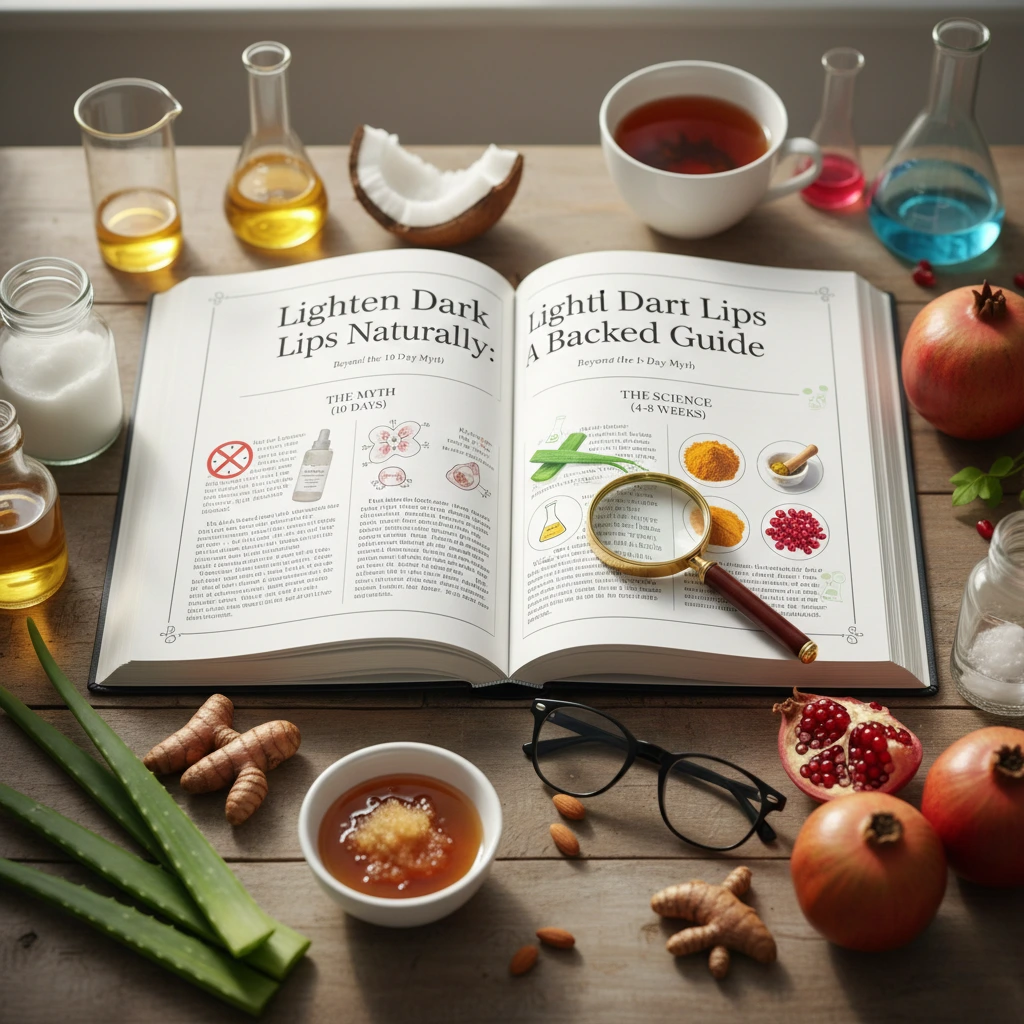
Dark lips can feel deeply personal – they affect how we feel in photos, how confident we are in conversation, and how we present ourselves to the world. If you’ve noticed your lips getting darker over time, you’re not alone. Studies show that lip hyperpigmentation is one of the most common cosmetic concerns globally, particularly affecting people with darker skin tones and those living in sun-intensive regions. The good news? There are proven natural remedies backed by dermatological research that can genuinely lighten dark lips. The challenge? Realistic expectations about timelines.
This guide moves beyond viral “10-day fixes” to provide you with evidence-based strategies that actually work – and the honest timeline for seeing results.
Understanding Why Your Lips Are Getting Darker
Before jumping into solutions, it helps to understand what’s actually happening. Lip darkening, clinically known as lip hyperpigmentation, occurs when your lips produce excess melanin – the same pigment that colors your skin. Unlike the rest of your face, your lip skin is uniquely vulnerable: it’s thinner, has less natural melanin protection, and the delicate tissue regenerates more frequently.
The main culprits behind dark lips:
Sun exposure remains the primary cause. Your lips contain significantly less protective melanin than facial skin, making them exceptionally susceptible to UV damage. Just 10-15 minutes of unprotected sun exposure can trigger melanin overproduction. This is why people living in high-altitude or tropical regions often develop darker lips naturally.
Smoking creates a compounding problem. Nicotine and benzpyrene in tobacco smoke stimulate melanin production directly. A 2013 dermatological study found that 100% of regular smokers showed measurable lip and gingival pigmentation. Smoking also reduces blood flow to the lips, starving them of oxygen and nutrients, which intensifies the darkened appearance.
Dehydration makes everything worse. When your lips lack moisture, dead skin cells accumulate, making pigmentation more visible. This explains why your lips might look darker in winter or after prolonged caffeine consumption (which is dehydrating).
Vitamin deficiencies, particularly B12, vitamin C, and iron, impair your skin’s ability to maintain healthy pigmentation and regenerate properly.
Hormonal changes during pregnancy, menstruation, or hormonal birth control can trigger temporary darkening due to increased melanin production.
Poor lip care habits compound the problem. Constant lip licking strips away natural moisture and damages the lip barrier. Using expired lip products exposes you to irritating bacteria. Harsh matte lipsticks and long-wear formulas further dry and damage the delicate tissue.
The Reality Check: How Long Natural Lightening Actually Takes
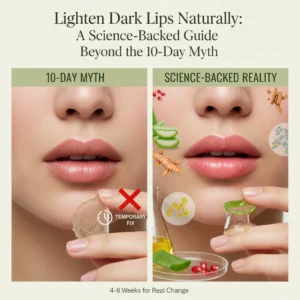
This is where honesty matters most. You’ll see headlines claiming “10-day lip lightening solutions.” Dermatologists and skincare researchers consistently dispute this timeline.
Here’s what the evidence actually shows:
Natural remedies: 2-4 weeks minimum for initial results, 8-12 weeks for significant improvement. This isn’t failure – this is how skin biology works. Lip cells turn over every 3-5 days, but melanin dispersal and new cell regeneration require consistency. A 2002 study on lemon juice’s depigmenting effects showed noticeable lightening after 30 days of daily application, not 10.youtube
Professional laser treatment: 2-5 days for initial results after each session. However, most people need 3-6 sessions spaced 2-3 weeks apart for optimal results. So even the “fastest” option typically requires 8-12 weeks total.
Chemical peels: Gradual improvement over 3-5 sessions. Results compound over time, with most visible changes appearing after 6-8 weeks of consistent treatment.
The frustrating truth? There is no overnight fix. But there is a path to measurably lighter, pinker lips – it just requires patience and consistency.
The Most Effective Natural Remedies (With Science Behind Them)
Rather than listing 50 home remedies of varying credibility, here are the ingredients with actual peer-reviewed evidence of efficacy for lip hyperpigmentation:
Lemon Juice: Your Melanin Inhibitor
Lemon’s citric acid acts as a natural alpha hydroxy acid (AHA), gently exfoliating dead skin while inhibiting melanin production. A 2002 study published in dermatological research found that citrus peel can act as a melanin inhibitor. However – and this is crucial – use it correctly:youtube
Application: Apply fresh lemon juice to clean lips before bed. Leave for 10-15 minutes, then rinse with cool water and apply a nourishing moisturizer immediately. The acidity can irritate if left too long. Do this daily, and expect to see subtle lightening within 2-3 weeks.
Why it works: Citric acid doesn’t just exfoliate surface cells – it interferes with tyrosinase, the enzyme that produces melanin. This dual action makes it one of the most evidence-backed natural treatments available.
Pro tip: Lemon + honey is significantly more effective than lemon alone. Honey is a natural humectant that counteracts lemon’s drying effects while adding its own skin-lightening properties.
Turmeric: The Ancient Science-Backed Solution
Curcumin, turmeric’s active compound, has been shown in a 2010 study to inhibit melanin production without affecting DNA synthesis – making it both effective and safe. Unlike some remedies that work primarily through exfoliation, turmeric targets melanin production at the cellular level.
Application: Mix turmeric powder with milk (or yogurt for added benefits) to form a paste. Apply to lips and leave for 5-10 minutes daily. The milk’s lactic acid provides gentle exfoliation while turmeric reduces pigmentation.
Expected timeline: 3-4 weeks of consistent use before noticeable lightening. Results compound as dead pigmented cells shed and new, lighter cells replace them.
Aloe Vera: The Skin Soother
Aloe vera contains aloesin, a compound that inhibits melanin production while simultaneously soothing inflammation. This makes it ideal for people whose lips are darkened AND irritated.
Application: Apply fresh aloe vera gel (not commercial aloe products) to clean lips daily. Leave until dry, then rinse. Can be used morning and evening without irritation.
Why it matters: Unlike lemon, aloe won’t dry your lips, making it suitable for long-term daily use. It’s also one of the gentlest options, ideal if you have sensitive lips.
Pomegranate: The Antioxidant Power
A 2005 study demonstrated that pomegranate extract significantly lightens skin hyperpigmentation. It works by providing antioxidants that repair UV damage while inhibiting melanin production.
Application: Mix pomegranate seed paste with rose water and a small amount of cream. Apply as a mask 2-3 times weekly for 15-20 minutes.
Licorice Extract and Kojic Acid: The Professional-Grade Naturals
Research shows that licorice extract (particularly glabridin) and kojic acid work 16 times more effectively than hydroquinone (a prescription depigmenting agent) in some studies. These natural compounds:
- Scavenge reactive oxygen species (ROS) that damage lip tissue
- Inhibit tyrosinase enzyme activity
- Provide anti-inflammatory benefits
Look for these in natural lip balms if you want evidence-based ingredients without DIY mixing.
Your 4-Week Natural Lightening Protocol
Rather than promising impossible 10-day results, here’s a realistic, science-backed approach that delivers measurable improvement:
Week 1-2: Foundation & Exfoliation
- Daily: Apply lemon juice + honey mixture for 15 minutes before bed. Follow immediately with coconut oil (the oil helps seal in moisture while lemon is working).
- 3x weekly: Use a gentle sugar scrub (3 teaspoons sugar mixed with 2 teaspoons coconut oil) for 2 minutes in circular motions. This removes dead pigmented cells.
- Daily: Apply SPF 30+ lip balm every morning and after eating.
- Throughout day: Drink 2-3 liters of water. Dehydration intensifies dark lip appearance.
Week 3-4: Layering & Maintenance
- Continue lemon + honey nightly
- Add aloe vera in the morning (aloe + lemon provides different mechanisms – targeting both melanin production and exfoliation)
- Reduce sugar scrub to 1-2x weekly (avoid over-exfoliation, which causes irritation and more pigmentation)
- Increase SPF lip balm application to 4-5 times daily if you’re in the sun
Expected results by Week 4: Subtle but noticeable lightening, particularly at the lip edges. Lips will feel more hydrated and less darkened due to improved moisture balance. Deepest pigmentation may require another 4-8 weeks.
Advanced Prevention: Stop the Darkening Cycle
True lip lightening requires addressing the root causes. Otherwise, you’re fighting a losing battle.
Sun Protection is Non-Negotiable
Apply a lip balm with SPF 30 or higher daily. This single habit prevents 90% of future darkening. Reapply every 2 hours outdoors or after eating. Yes, this feels tedious. Yes, it’s the most important step you can take.
Smoking: The Irreplaceable Variable
This is uncomfortable to state directly, but the research is unambiguous: no lip lightening treatment – natural or professional – can overcome ongoing smoking damage. Quitting smoking produces faster, more dramatic lip color improvement than any remedy can achieve.
Hydration is Foundational
Dehydrated lips look 30% darker than well-hydrated ones. Drink enough water (roughly half your body weight in ounces daily), and avoid excessive caffeine, which accelerates dehydration. Apply nourishing lip balms containing hyaluronic acid, shea butter, or coconut oil multiple times daily.
Dietary Support
Lips reflect systemic health. Ensure adequate intake of:
- Vitamin C (citrus, berries, bell peppers): Essential for collagen production and skin regeneration
- Vitamin B12 (meat, fortified cereals, nutritional yeast): Deficiency directly causes darkened lips
- Iron (leafy greens, legumes): Deficiency creates pale, patchy lips that highlight underlying pigmentation
- Antioxidants (berries, dark chocolate, green tea): Combat UV-induced melanin overproduction
When to Seek Professional Help
If after 8-12 weeks of consistent natural treatment you see minimal improvement, professional options include:
Laser treatment can lighten lips in 2-5 days per session (3-6 sessions needed total). A Q-switched laser targets melanin directly without harming surrounding tissue. Cost ranges from ₹5,000-₹15,000 per session in India.
Chemical peels using lactic or mandelic acid gently remove pigmented surface layers. Results compound over 3-5 sessions spaced 2-3 weeks apart. More affordable than laser (₹2,000-₹5,000 per session) but slower.
Prescription topical creams containing hydroquinone or retinoids accelerate natural lightening when used consistently.
Consulting a dermatologist is particularly wise if:
- Your lips darkened suddenly (could indicate underlying health issues)
- Dark patches are asymmetrical or spreading
- You have pain, swelling, or open sores
- Natural remedies cause persistent irritation
He and She Care: Integrating Wellness into Lip Health
Comprehensive lip health extends beyond topical treatments. Brands like He and She Care that emphasize holistic wellness recognize that beautiful lips begin with internal health – proper nutrition, hydration, and stress management all influence skin quality and pigmentation patterns. Consider your lip care as part of a broader commitment to health, not just cosmetics.
Frequently Asked Questions
Q: Can I lighten my lips in truly 10 days?
A: Not significantly, no. Your lips’ cell turnover cycle is 3-5 days, but meaningful pigment reduction requires 14-21 days minimum. Marketing claims of 10-day transformations rely on lighting, makeup, or filters – not actual melanin reduction.
Q: Which remedy works fastest?
A: Lemon juice + honey combination shows results most quickly (2-3 weeks), followed by turmeric (3-4 weeks). Professional laser shows fastest absolute results (days per session) but requires multiple sessions spaced weeks apart.
Q: Are dark lips a sign of disease?
A: Usually not. Gradual darkening is cosmetic. However, sudden darkening, uneven pigmentation, pain, or swelling warrants a dermatology consultation to rule out infection, allergies, or systemic issues.
Q: Will dark lips come back after lightening?
A: Yes, if you stop preventative habits. Continued sun exposure, smoking, or poor hydration will restart the darkening process. Maintenance is ongoing – think of it like dental care.
Q: Can I use lemon juice if I have sensitive lips?
A: Use diluted lemon juice (1:1 with water) and always follow with moisturizer. If irritation develops, switch to aloe vera or turmeric instead. Never let lemon sit for more than 15 minutes.
The Bottom Line: Patience Produces Results
Your dark lips developed over months or years. Expecting them to vanish in 10 days sets you up for disappointment. But following a consistent, science-backed protocol for 6-8 weeks? That delivers measurable, genuine lightening that others will notice.
The most effective approach combines evidence-based natural remedies (lemon + honey, turmeric, aloe vera), aggressive prevention (SPF daily, smoking cessation, hydration), and dietary support. Consistency matters far more than any single ingredient.
Start today. Track progress weekly with photos in consistent lighting. Adjust based on your skin’s response. Within 4-6 weeks, you’ll notice softer, pinker lips. Within 8-12 weeks, the transformation becomes undeniable.
Your lips deserve the same care you give your face – patient, evidence-based, and sustainable.