
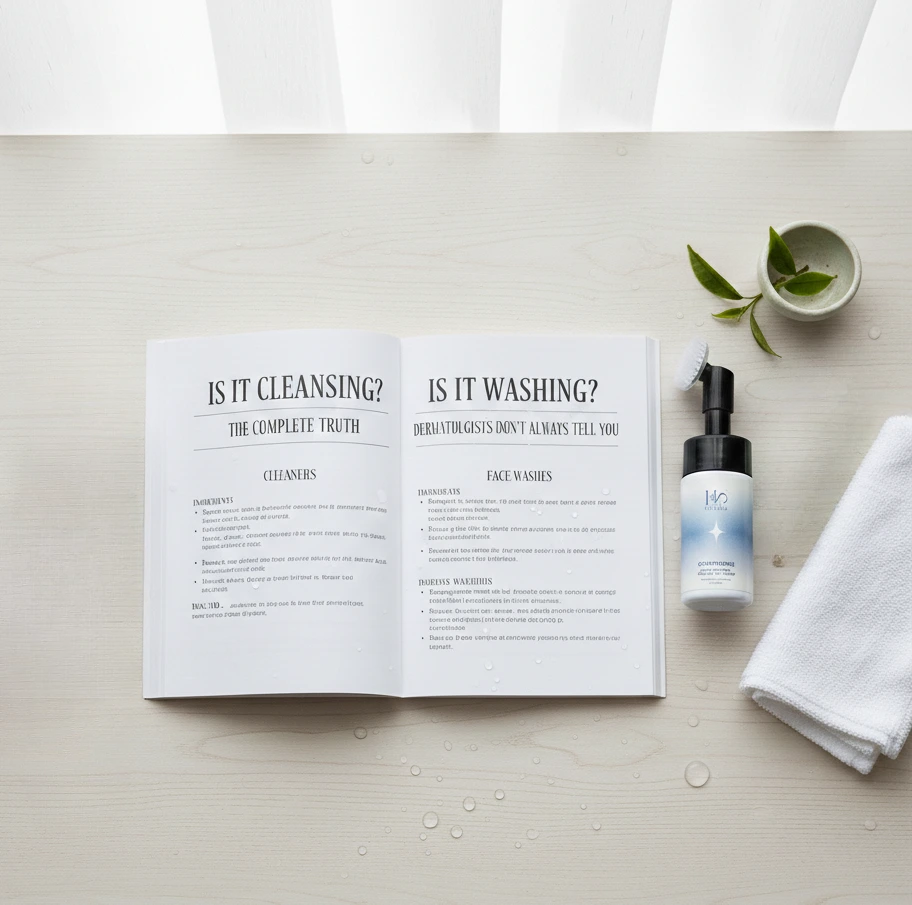
Have you ever stood in front of a skincare shelf, staring at dozens of cleansing products, wondering if you really need both a cleanser and a face wash? Or are they just marketing speak for the same thing?
Here’s the honest truth: they’re not the same, and knowing the difference could literally transform your skin.
I get this question constantly, and here’s what I found after diving deep into dermatological research: while both aim to clean your face, they work in completely different ways. One offers deep, thorough cleansing that penetrates pores. The other focuses on gentle hydration while removing surface impurities. Sounds subtle? It’s not. This distinction could be why your skin feels tight after washing or why breakouts persist even though you’re “cleansing regularly.”
The skincare market in India alone is growing at 6.76% annually, projected to reach USD 4.34 billion by 2030, and a significant portion of this growth is driven by consumers finally understanding which product actually works for their specific skin type. Yet, most people still use the wrong cleanser for their skin, damaging their skin barrier in the process.
In this comprehensive guide, I’ll break down everything you need to know about cleansers versus face washes – the real differences, which one your skin actually needs, and how to use them correctly without sabotaging your skin barrier.
The Core Difference: One Deep Cleans, The Other Just Looks Good (And That’s Okay)
Let me start with the most important distinction: texture and foaming properties.
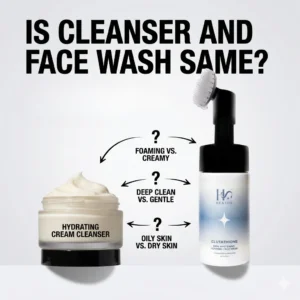
Face washes foam. Cleansers don’t.
This isn’t just a cosmetic difference – it’s fundamental to how each product functions. A face wash is formulated to lather into a foam when applied to damp skin. This foaming action is caused by surfactants (cleaning agents) that break down excess oil, dirt, and sweat from your pores. It’s like the difference between a gentle hand wash and a heavy-duty degreaser.
A cleanser, on the other hand, is typically a non-foaming liquid, cream, lotion, or gel. It focuses on gently dissolving impurities without aggressive foaming action. Think of it as a makeup remover that also cleanses – it works more through dissolution than harsh scrubbing.
But here’s where most people get confused: Just because a product looks different doesn’t mean it’s better. In fact, the reality is much more nuanced.
Face Wash vs. Cleanser: The Head-to-Head Breakdown
Let me give you a clear comparison table so you understand exactly what you’re choosing between:
| Aspect | Face Wash | Cleanser |
| Foaming | Yes, creates lather | No, minimal to no foam |
| Texture | Gel, foam, liquid | Creamy, milky, oil-based, gel |
| Primary Function | Deep pore cleansing | Gentle makeup/surface removal |
| Best For Skin Type | Oily, acne-prone, combination | Dry, sensitive, normal |
| Hydration Level | Can be drying | Highly hydrating |
| Oil Control | Excellent | Moderate |
| Makeup Removal | Good for light makeup | Excellent for heavy makeup |
| Barrier Impact | Can damage if harsh | Preserves natural oils |
| How It Works | Breaks down oil/sweat | Dissolves impurities |
| Post-Wash Feel | Fresh, mattified, sometimes tight | Soft, supple, moisturized |
Why does this matter? Because using the wrong cleanser for your skin type is one of the top reasons people struggle with acne, dryness, sensitivity, and a compromised skin barrier.
What’s Inside? Ingredient Philosophy Differences
Here’s something dermatologists want you to know: the formula is where cleansers and face washes truly diverge.
Face wash ingredients typically include:
- Stronger surfactants (oil-breaking agents)
- Salicylic acid or benzoyl peroxide (for acne)
- Tea tree oil or neem (antimicrobial properties)
- Astringent ingredients (oil-control)
These ingredients are designed to penetrate deep, which is perfect if you have oily skin producing excess sebum. But if your skin is already dry or compromised? These ingredients will destroy your skin barrier.
Cleanser ingredients typically include:
- Mild surfactants
- Ceramides (barrier repair)
- Glycerin (hydration)
- Hyaluronic acid (moisture retention)
- Plant oils (nourishment)
The philosophy here is: “Clean gently, hydrate while you’re at it.” It’s like the difference between using a harsh soap versus a gentle, moisturizing body wash.
Real talk: 82% of consumers who find skincare products through detailed searches and ingredient research show 82% higher repeat purchase rates, which tells us that informed customers aren’t just picking products randomly – they’re choosing based on understanding what their skin actually needs.
The Truth About Deep Cleansing: Does It Really Work?
Everyone talks about “deep cleansing” as if it’s automatically the gold standard. But here’s what the research actually says:
A clinical study published in dermatology journals found that a deep-cleansing gel containing salicylic acid, zinc gluconate, and lipohydroxy acids reduced acne lesions by 56.3% after 84 days and actually improved the skin barrier (measured by reduced transepidermal water loss) at day 84.
That’s impressive. But here’s the catch: this only works if the formula is specifically designed to deep clean while repairing the barrier simultaneously.
Most harsh face washes do the deep cleaning part but completely ignore the barrier repair. That’s why you feel tight, uncomfortable, and subsequently more oily after washing. Your skin is desperately trying to compensate for stripped natural oils.
The reality? Deep cleansing works. But it only works well if your skin can tolerate it. For sensitive, dry, or compromised skin, attempting deep cleansing with a harsh face wash is like using sandpaper to exfoliate – you’ll get results, but at the cost of damaging your skin.
Which One Should You Actually Use? The Skin Type Decision Tree
Let’s get practical. Here’s exactly which product your skin needs:
Use a Face Wash if you have:
- Oily skin that produces excess sebum throughout the day
- Acne-prone skin with frequent breakouts
- Combination skin (oily T-zone, normal cheeks)
- You live in a humid climate and accumulate sweat/pollution
- You work out regularly and cleanse post-workout
A face wash removes excess oil, sweat, and pollution effectively. For your skin type, this is non-negotiable. Brands like CeraVe Foaming Gel Cleanser or Neutrogena Oil-Free Acne Wash are dermatologist-recommended because they deep clean without being too harsh.
Use a Cleanser if you have:
- Dry skin that feels tight after washing
- Sensitive skin prone to irritation and redness
- Normal skin that doesn’t struggle with excess oil
- A compromised or damaged skin barrier
- You wear makeup regularly and need effective makeup removal
- You prefer a gentler morning cleanse
Cleansers remove makeup, sunscreen, and surface impurities while protecting your skin barrier. They’re the smarter choice if your skin has ever felt uncomfortable after cleansing.
Use Both (Double Cleansing) if you have:
- Combination skin with distinct oily and dry zones
- You wear heavy makeup or waterproof products
- You use mineral or chemical sunscreen daily
- You live in a polluted environment
- You want the most thorough cleanse possible
The idea here is: cleanser first (removes makeup/sunscreen), then face wash (removes residual oil and debris). This is increasingly popular and recommended by many dermatologists for makeup-wearing individuals.
The Skin Barrier Crisis: Why Using the Wrong Cleanser Damages Your Skin
This is important enough to warrant its own section because it affects nearly everyone at some point.
Your skin barrier is a delicate layer of lipids and proteins that keeps moisture in and irritants out. When you use harsh face washes continuously, harsh surfactants literally damage skin proteins and lipids, leading to:
- Dryness and tightness
- Increased oil production (your skin overcompensating)
- Irritation and redness
- Inflammation and breakouts
- Accelerated aging
- Sensitivity to other skincare products
Research shows that high-pH cleansers (most foaming face washes have a pH of 7+, while your skin’s optimal pH is 4.5-5.5) disrupt your skin’s acidic environment, killing good bacteria and damaging the barrier.
Here’s the kicker: your skin barrier takes 2-4 weeks to recover once you stop using harsh products. During that time, your skin will feel worse before it gets better.
This is why dermatologists increasingly recommend: “Cleanse once thoroughly with a gentle product” rather than “deep cleanse aggressively twice daily.” Over-cleansing is now recognized as a bigger problem than under-cleansing.
How to Use Cleanser and Face Wash Correctly (The Right Technique Matters)
Knowing which product to use is only half the battle. How you use it matters equally.
For Face Wash (Oily/Acne-Prone Skin):
- Wet your face with lukewarm water
- Use a coin-sized amount (more isn’t better)
- Massage gently for 20-30 seconds, working upward in small circles
- Focus on oily zones: T-zone, chin, any congested areas
- Rinse thoroughly with cool water
- Pat dry with a soft towel (don’t rub)
- Moisturize within 60 seconds to rehydrate
Pro tip: Resist the urge to use a cleansing brush or cloth. Your fingertips are gentle enough, and cleansing tools can micro-damage your barrier.
For Cleanser (Dry/Sensitive/Normal Skin):
- Start with dry hands (moisture can reduce effectiveness)
- Use a dime-to-nickel-sized amount
- Apply to damp skin and massage gently for 30-45 seconds
- Don’t rinse immediately – let it sit for a few seconds to dissolve makeup
- Rinse with lukewarm water, not hot (hot water strips natural oils)
- Gently pat dry
- Apply moisturizer immediately while skin is still slightly damp
The Double Cleansing Method (If You Wear Heavy Makeup):
- Step 1: Use your cleanser (preferably cream or oil-based) for 45-60 seconds to dissolve makeup and SPF
- Step 2: Rinse gently
- Step 3: Use your face wash (water-based) for 20-30 seconds to remove residual oil
- Step 4: Rinse thoroughly with cool water
- Step 5: Moisturize immediately
Research insight: A survey-based study showed that people who double cleanse with an oil cleanser first, then water-based cleanser, actually had more acne in some cases, suggesting that over-cleansing is a real concern. So if you double cleanse, do it gently and not more than once daily.
What About He and She Care? A Real-World Example
Since you asked about real brands, let’s talk about He and She Care Beauty Products, which has positioned itself as a complete skincare ritual brand focused on “deep cleansing to overnight brightening.”
Their Glutathione Foaming Face Wash is marketed for twice-daily use (morning and evening), which aligns with what we know about oily/combination skin needing regular deep cleansing. This is a face wash, not a cleanser, so it’s designed for oil control and deep pore cleansing.
What they’ve done well is recognize that consumers want complete regimens, not isolated products. They’re tapping into the growing trend where 52% of skincare consumers expressed interest in personalized skincare solutions.
However, here’s the important caveat: using any face wash twice daily, even a foaming one, requires monitoring your skin response. If it feels tight, dry, or irritated, scale back to once daily and add a hydrating cleanser for the other cleanse time.
The Latest Market Trends: What’s Driving the Cleanser vs. Face Wash Conversation
Understanding current market trends helps you make smarter choices:
1: Natural and Organic Formulations (74% Consumer Demand)
Consumers are increasingly rejecting harsh synthetic surfactants (SLS, SLES) and gravitating toward plant-based alternatives. The India skincare market is seeing massive demand for cleansers with neem, turmeric, aloe vera, and tea tree oil.
2: Foam Cleansers Are the Rising Stars
While gel-based face washes command 39.45% of the market, foam-based cleansers are growing at a CAGR of 7.49%, driven by consumers’ preference for luxurious textures and social media appeal. Younger audiences, especially, are drawn to the visual appeal of foaming products.
3: Multifunctional Products
Modern consumers want cleaners that also exfoliate, brighten, or treat acne simultaneously. Single-purpose products are becoming less appealing.
4: Sensitive Skin Acceleration
The sensitive skin segment is expanding at a CAGR of 9.72%, with 71% of global consumers reporting skin sensitivity. This is driving demand for hypoallergenic, fragrance-free, low-pH cleansers instead of harsh face washes.
5: Personalized Skincare
AI-driven skin diagnostics and mobile apps are helping consumers find their ideal cleanser. Tech-forward brands are using machine learning to recommend products based on individual skin profiles.
Advanced Tips: The Mistakes Most People Make (And How to Avoid Them)
Even when people choose the right cleanser or face wash, they still mess up the execution. Here’s what to avoid:
1: Washing Your Face Too Often
Myth: More washing = cleaner skin
Truth: Overwashing strips natural oils, triggers oil production, and compromises your barrier.
Fix: Cleanse maximum twice daily – morning and night. If you exercise midday, just rinse with water or use a gentle micellar water.
2: Using Hot Water
Hot water opens pores (true) but also strips natural oils (worse). Opt for lukewarm water instead.
Fix: Lukewarm during cleansing, cool water for final rinse to close pores and reduce irritation.
3: Skipping Moisturizer After Cleansing
Cleansing temporarily increases water loss. If you don’t replenish moisture within 60 seconds, your barrier stays vulnerable.
Fix: Apply moisturizer while skin is still slightly damp to lock in hydration.
4: Using a Harsh Cleanser on Compromised Skin
If your skin feels tight, irritated, or sensitive, switching to an even “stronger” face wash is counterintuitive and harmful.
Fix: Switch to a hydrating cleanser and give your barrier 2-4 weeks to recover.
5: Mixing Incompatible Products
Using a face wash + harsh exfoliant + retinoid every night is a recipe for barrier damage.
Fix: If you’re using active treatments (exfoliants, retinoids, vitamin C), use a gentle cleanser instead of a face wash.
6: Not Rinsing Thoroughly
Leftover cleanser residue disrupts pH, causes irritation, and interferes with other skincare products.
Fix: Rinse at least 15-20 times with clean water to ensure no product remains.
How to Build Your Perfect Cleansing Routine (The Step-by-Step Guide)
Now let’s build your personalized routine based on your skin type:
For Oily & Acne-Prone Skin:
Morning: Face wash (gel or foaming) + lightweight moisturizer + SPF
Evening: Face wash (gel or foaming) + targeted acne treatment + lightweight moisturizer
Weekly: Replace one face wash with a gentle cleanser to avoid over-stripping
For Dry & Sensitive Skin:
Morning: Cleanser (cream or milk-based) + rich moisturizer + SPF
Evening: Cleanser (cream or milk-based) + serums + rich moisturizer
Avoid face washes entirely unless you’re struggling with congestion
For Combination Skin:
Morning: Cleanser (use on entire face, even though it won’t deep clean the T-zone, your skin is less resilient in morning)
Evening: Double cleanse – cleanser first (makeup removal), face wash second (T-zone only)
Or: Use a gel cleanser (middle ground) that’s gentle enough for dry zones but effective for oily zones
For Normal Skin:
Morning: Gentle cleanser or water rinse
Evening: Face wash or cleanser (whichever feels better)
You have the flexibility to experiment and find what makes your skin feel best
Decoding Product Labels: What to Look For When Choosing
When shopping, look for these indicators:
Signs of a Gentle Cleanser:
- pH listed as 4.5-5.5 (skin-friendly)
- Contains ceramides, glycerin, or hyaluronic acid
- “Soap-free” or “sulfate-free”
- Described as “hydrating” or “gentle”
- Ingredients like aloe vera, chamomile, oat extract
Signs of a Deep-Cleansing Face Wash:
- Contains salicylic acid, benzoyl peroxide, or tea tree oil
- Described as “foaming,” “deep-cleansing,” or “oil-control”
- Marketed for oily or acne-prone skin
- May contain stronger surfactants (SLS, SLES)
- Described as leaving skin “fresh” or “mattified”
Green Flags for Either Product:
- Dermatologist-tested
- Non-comedogenic (won’t clog pores)
- Hypoallergenic
- Fragrance-free or minimal fragrance
- Clinical studies backing claims
The Science: Why pH Matters More Than Most Realize
Here’s a scientific detail that directly impacts your skin health: skin pH is critical.
Your skin naturally has a pH of 4.5-5.5 (acidic). This acidic environment:
- Maintains barrier enzymes
- Supports good bacteria
- Prevents pathogenic bacteria from thriving
- Keeps your skin’s protective layer intact
Most foaming face washes have a pH of 7-8+ (neutral to alkaline), which disrupts this delicate balance. Using a high-pH cleanser:
- Kills beneficial bacteria
- Damages barrier enzymes
- Increases water loss (TEWL – transepidermal water loss)
- Makes skin more reactive and sensitive
- Promotes acne and irritation
This is why low-pH cleansers (creamy, gentle cleansers) are increasingly recommended for daily use, and why dermatologists worry more about over-cleansing than under-cleansing.
Pro tip: If a product doesn’t list pH, email the brand. Companies that care about skin health will have this information readily available.
Addressing Your Skin Concerns: Cleanser/Face Wash Solutions
Concern: Acne and Breakouts
Use: Face wash with salicylic acid or benzoyl peroxide (1-2x daily)
Don’t overdo it: Harsh face washes can trigger more acne through barrier damage
Balance with: A hydrating moisturizer and weekly gentle cleanser
Concern: Sensitivity and Irritation
Use: Gentle, fragrance-free cleanser (cream or milk-based)
Avoid: Face washes entirely until sensitivity resolves
Recovery time: 2-4 weeks for barrier repair
Concern: Oiliness and Shine
Use: Face wash twice daily + blotting papers during day
Don’t rely on: Excessive cleansing (leads to more oil production)
Add: A lightweight, non-comedogenic moisturizer
Concern: Makeup Buildup and Congestion
Use: Double cleansing method – cleanser first, then gentle face wash
Frequency: Nightly, especially on heavy makeup days
Consider: Oil-based cleansers (they dissolve makeup effectively)
Concern: Dryness and Tightness
Use: Hydrating cleanser only
Avoid: Any foaming face wash temporarily
Add: Facial oil or richer moisturizer after cleansing
The Future of Face Cleansing: What’s Coming Next
The skincare industry is evolving rapidly. Here’s what’s on the horizon:
Waterless Cleansers: Solid, concentrated cleansers reducing plastic waste. Brands are creating sustainable alternatives.
Fermented Ingredients: Cleansers with fermented botanical extracts for better skin absorption and probiotic benefits.
Adaptogenic Cleansers: Face washes infused with adaptogens like ginseng and ashwagandha for stress-related skin benefits.
AI-Powered Personalization: Apps analyzing your skin daily and recommending specific cleansers based on real-time skin conditions (humidity, pollution, stress levels).
Hybrid Formulations: Single products that cleanse, remove makeup, and treat specific concerns simultaneously.
Male-Specific Lines: The men’s grooming segment is growing at 8.74% CAGR, with brands creating targeted cleansers for male skin.
(FAQs)
Q1: Can I use a face wash instead of a cleanser for sensitive skin?
Not recommended. Face washes are typically too harsh for sensitive skin. They contain stronger surfactants and often have a higher pH that disrupts your skin barrier. Stick with a gentle, hydrating cleanser designed for sensitive skin. If your skin is already compromised, use lukewarm water + gentle cleanser for 1-2 weeks before reintroducing any face wash.
Q2: Is double cleansing necessary, or is it just a fad?
Double cleansing is beneficial if you wear makeup or heavy sunscreen, but it’s not mandatory for everyone. Dermatologists increasingly recommend: “One thorough, gentle cleanse is better than two harsh cleansings.” If you do double cleanse, use a gentle cleanser first (makeup removal) and a mild face wash second (oil removal). Don’t do it more than once daily – over-cleansing causes more problems than it solves.
Q3: My skin feels tight after using face wash. Does that mean it’s working?
Actually, no. “Squeaky clean” is a sign of over-stripping, not effective cleansing. Your skin should feel clean but comfortable. If it feels tight, your cleanser is too harsh. Switch to a gentler product immediately and give your barrier 2-4 weeks to recover. Tightness indicates barrier damage, which leads to irritation, sensitivity, and accelerated aging.
Q4: How do I know if my skin barrier is damaged from cleansing?
Signs include: tightness, dryness, redness, irritation, sudden sensitivity to other products, increased breakouts, or a burning sensation. If you have these symptoms and you’ve been using a harsh face wash 2x daily, your barrier is likely compromised. Solution: Switch to a hydrating cleanser, cleanse once daily (or every other day), and apply a moisturizer with ceramides. Recovery takes 2-4 weeks minimum.
Q5: Should I use a different cleanser in summer vs. winter?
Absolutely. Summer: Oil-control face wash or gel cleanser (humidity increases oil production). Winter: Hydrating cleanser or cream-based formula (cold, dry air strips moisture). Your skin behaves differently seasonally, so adjusting your cleanser makes sense. Listen to your skin’s signals rather than rigidly sticking to the same product year-round.
Conclusion: The Truth About Cleansers vs. Face Wash
After analyzing dermatological research, market data, and real consumer feedback, here’s the definitive answer: No, cleanser and face wash are not the same. One deep cleans while the other prioritizes hydration and gentleness. Choosing the right one for your skin type is foundational to skin health.
The mistake most people make is viewing cleansers as “inferior” to face washes. In reality, gentle cleansers are superior for most skin types because they clean effectively without compromising your barrier. Only oily, acne-prone, and combination skin types truly need the aggressive oil-removal power of face washes.
Here’s your action plan:
- Identify your skin type honestly (not what you wish it was)
- Choose the right cleanser/face wash based on your skin’s actual needs
- Use it correctly – gentle technique, appropriate frequency, moisturize immediately
- Monitor your skin’s response for 2-4 weeks before making changes
- Adjust seasonally as your skin’s needs shift
- Prioritize barrier health over “deep cleansing” if you have any signs of sensitivity
Brands like He and She Care are right about one thing: complete skincare rituals matter. But the best ritual starts with the right cleanser for your unique skin – not the product with the best marketing.
Your skin barrier is your most valuable skincare asset. Protect it first, then optimize everything else.
Ready to assess your current cleansing routine? Take a week to observe how your skin feels after cleansing. If it feels tight, irritated, or overly dry, you’re likely using the wrong product. If it feels clean and comfortable, you’ve found your match.
The bottom line? Not all cleansers are created equal, and neither are all face washes. The best one is the one that leaves your skin clean, balanced, and healthy – exactly as He and She Care’s mission implies, though true skin health comes from understanding these fundamental differences.
Disclaimer: This article is for informational purposes. For persistent skin concerns, consult a dermatologist.