



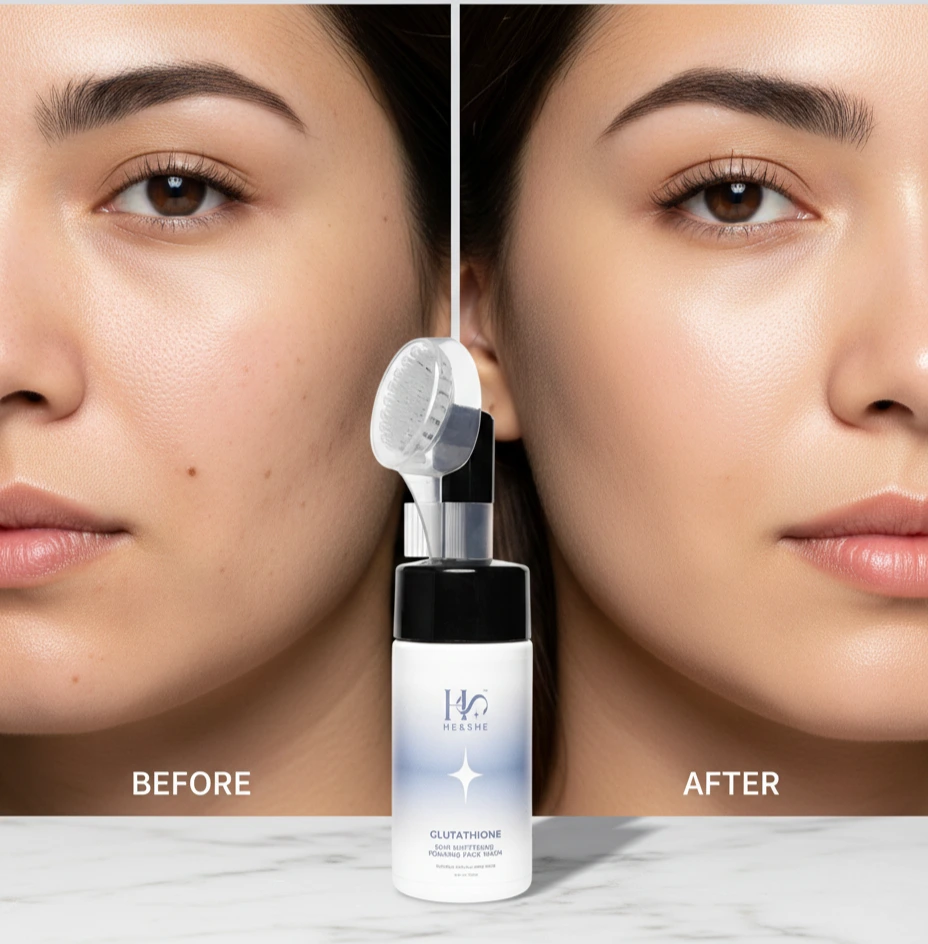
Say Goodbye to Dark Spots: How Glutathione Facewash Changed My Skin
Dark spots have a way of making you feel like your skin is working against you. Whether they’re leftover marks from acne, sun damage creeping up after years of beach days, or those mysterious patches that seem to deepen with age, hyperpigmentation can feel relentless. I spent three years trying everything – from expensive laser treatments to DIY lemon juice masks – before I discovered that the real transformation started with something as simple as switching my facewash.
That’s when I met glutathione.
If you’re reading this, you’ve probably already scrolled past a thousand “miracle” skincare products. But here’s what I learned: glutathione isn’t hype. It’s science. And when it comes to dark spots, it might just be the ingredient your skin’s been waiting for.
Understanding Dark Spots: Why Your Skin Darkens
Before we talk solutions, let’s understand the enemy. Dark spots aren’t random – they’re your skin’s way of responding to stress, damage, or hormonal shifts. Knowing what you’re dealing with helps you fight back smarter.
The Three Main Types of Dark Spots
Sun Spots (Age Spots or Solar Lentigines)
These are the most common. Years of UV exposure trigger your melanocytes – the cells responsible for producing melanin – to go into overdrive. The result? Small, flat, dark patches that usually appear on your face, hands, and shoulders. They’re essentially concentrated areas of melanin that never quite got the memo to stop producing.
Post-Inflammatory Hyperpigmentation (PIH)
This is what happens after acne, eczema, or even a bad waxing appointment. Your skin heals, but the inflammation leaves behind excess melanin deposits. Unlike active acne, these marks can linger for months – sometimes years – making your skin look uneven long after the original problem is gone.
Melasma
If you’ve ever heard the term “pregnancy mask,” you’ve heard of melasma. These larger, symmetrical patches typically show up on the cheeks, forehead, and upper lip, especially in people with darker skin tones. Hormonal changes, sun exposure, and genetics all conspire to create these stubborn marks. Melasma is the rebellious teenager of dark spots – it doesn’t follow the rules and requires patience to fade.
Why This Happens to Your Skin
Your skin produces melanin for protection – it’s a natural sunscreen. But sometimes, this protective response gets stuck in overdrive. The culprits include:
- UV radiation: Triggers melanin production as a defense mechanism
- Hormonal fluctuations: Pregnancy, birth control, and hormone therapy can amplify melanin production
- Inflammation: Acne, cuts, or irritation signal your skin to produce more protective melanin
- Genetics: If your parents had dark spots, your melanocytes are pre-programmed to be extra sensitive
- Age: As you age, your skin’s ability to regulate melanin becomes less efficient
Understanding this helped me realize that dark spots weren’t a personal failing – they were a biological response. And biology can be changed.
What Is Glutathione and Why Does It Work on Dark Spots?
Let me introduce you to your skin’s new best friend: glutathione (pronounced “gloom-ah-thigh-own”).
Glutathione is a tripeptide – a tiny molecule made of three amino acids: cysteine, glycine, and glutamate. Your body naturally produces it, but here’s the problem: stress, poor diet, age, and environmental toxins deplete your stores. That’s where topical glutathione comes in.
The Science Behind the Brightening
Glutathione works through multiple mechanisms, but three are particularly powerful for dark spots:
- It Blocks Tyrosinase (The Melanin Enzyme)
Tyrosinase is the enzyme that cranks out melanin. Glutathione essentially tells this enzyme to take a break by binding to the copper ions it needs to function. No tyrosinase activity = less melanin production = lighter skin over time. - It Shifts Dark Pigment to Light Pigment
Here’s the clever part: glutathione doesn’t just stop melanin production – it actually transforms the melanin that exists. It converts eumelanin (the dark brown pigment) into pheomelanin (the lighter yellow-red pigment). It’s like nature’s color correction filter. - It Scavenges Free Radicals
UV exposure creates reactive oxygen species (ROS) – essentially cellular damage. Glutathione neutralizes these free radicals before they trigger even more melanin production. It’s both prevention and treatment in one molecule.
When I started using glutathione facewash, I wasn’t just cleaning my face – I was actively disrupting the melanin production pipeline. That’s why the results felt different from other products I’d tried.
Clinical Evidence: What Studies Say About Glutathione for Dark Spots
I’m not asking you to believe me on faith. The science is solid.
Key Finding #1: Rapid Melanin Reduction
A double-blind, randomized controlled trial by Watanabe et al. found that topical glutathione (in oxidized form, or GSSG) applied twice daily for 10 weeks produced:
- Significantly lower melanin index compared to placebo (p<0.001)
- 66.7% of participants showed visible skin whitening by week 10
- Bonus benefits: improved skin moisture and reduced wrinkle formation
Key Finding #2: Topical Glutathione Beats Placebo
In an 8-week study by Etnawati et al., skin care products containing 0.1% and 0.5% glutathione showed:
- Significant increases in skin lightness (ΔL*) as early as week 2
- 0.5% glutathione was superior for reducing hyperpigmented lesions by week 8
- Only minor side effects: mild tingling sensation (rare) and temporary acne worsening (also rare)
Key Finding #3: Combined Approach Works Best
Research by Wahab et al. revealed that combining topical and oral glutathione produced superior results compared to using either method alone, with notably reduced melanin indices and increased skin brightness.
The Timeline: What to Expect
- Weeks 1–2: Your skin feels cleaner, more hydrated (detoxification beginning)
- Weeks 3–4: You notice a subtle glow and softness in skin tone
- Weeks 5–6: Pigmentation starts reducing visibly
- Weeks 7–10: Noticeable brightness and improved skin tone
- Weeks 10–16: Significant skin lightening (most pronounced results)
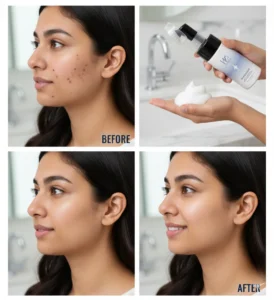
For my own skin, I started seeing subtle changes around week 4 – my foundation sat more evenly. By week 8, people were asking if I’d done something different. By week 12, the dark spots that had haunted me for three years were noticeably faded.
The Problem with Other Dark Spot Solutions
Before I found glutathione, I tried everything. Here’s why other approaches fell short:
Why Natural Remedies Alone Don’t Cut It
Don’t get me wrong – natural ingredients help. Aloe vera contains aloin, which can reduce melanin production. Turmeric has anti-inflammatory properties. Licorice root extract helps fade brown patches. Green tea is packed with antioxidants.
But here’s the catch: these ingredients are gentle but slow. We’re talking 2–3 months for subtle changes, and the results plateau. They work better as preventatives than as solutions for existing dark spots. Plus, consistency is brutal – you need to be religious about your routine, and even then, results are modest.
Why Lasers and Peels Are Expensive and Risky
Professional treatments like laser therapy or chemical peels can work, but they come with downsides:
- Cost: $500–$3,000+ per session (multiple sessions needed)
- Downtime: Redness, flaking, and peeling for days or weeks
- Risk: Uneven pigmentation, especially for darker skin tones
- Maintenance: Results fade without ongoing treatments
I spent $1,500 on one laser session and saw maybe a 20% improvement. My friend with deeper skin tone actually developed uneven pigmentation. That’s when I realized: there had to be a better way.
Vitamin C and Other Serums: The Hype vs. Reality
Vitamin C serums are popular for a reason – they do work. They inhibit melanin production and brighten skin. But they’re also:
- Unstable: Oxidize quickly, losing potency
- Expensive: Good vitamin C serums run $60–$150+
- Irritating: Can cause sensitivity, especially on reactive skin
- Slow: 3–6 months for noticeable changes
When I combined vitamin C with glutathione facewash, though? That’s when things accelerated.
How to Use Glutathione Facewash Correctly (And Maximize Results)
Using glutathione facewash isn’t rocket science, but there’s a right way and a “you’re wasting money” way. Let me share what actually works.
Your Daily Glutathione Routine
Morning Routine:
- Cleanse: Use your glutathione facewash (about coin-sized amount) on a wet face. Massage gently for 30–45 seconds to remove overnight oil and dead skin cells.
- Pat Dry: Use a clean towel – don’t rub aggressively, as this can irritate.
- Apply Serum (optional but recommended): Wait 30 seconds, then apply a vitamin C serum or lightweight hydrating serum. Glutathione works synergistically with vitamin C to enhance results.
- Moisturize: Lock in hydration with a lightweight moisturizer.
- Sunscreen: This is non-negotiable. SPF 30+ every single day. UV exposure will undo all your glutathione work.
Evening Routine:
- Cleanse: Same as morning – use your glutathione facewash.
- Pat Dry: Air-dry or gentle towel.
- Apply Treatment (if using): A glutathione serum or niacinamide-based treatment works beautifully here.
- Moisturize: Use a slightly richer cream at night since your skin repairs itself during sleep.
Pro Tips for Faster Results
Consistency is Everything: Your skin regenerates every 28–30 days. You need at least 4 weeks of consistent use to see real changes. Most people give up at week 2 because they expect overnight miracles. Don’t be that person.
Pair Glutathione with Vitamin C: Studies show vitamin C enhances glutathione’s effectiveness by recycling it and maintaining its potency in your skin. I applied vitamin C serum in the morning and glutathione facewash at night.
Use Sunscreen Like Your Life Depends on It: UV exposure triggers melanin production. If you’re not protecting your skin, you’re literally undoing your glutathione treatment. Think of SPF as the lock that keeps dark spots from coming back.
Stay Hydrated: Drink 8–10 glasses of water daily. Your skin’s ability to renew itself depends on hydration. Topical glutathione works better on hydrated skin.
Avoid Irritating Products: While using glutathione, skip harsh exfoliants, acids, and vitamin A for the first 2 weeks. Let your skin adjust to the brightening treatment first. After that, you can gradually introduce other actives.
Real Results: How Long Until You See Changes?
This is the question everyone asks: “How long until I see results?”
The honest answer: it depends on your starting point, but here’s what the data shows
| Timeline | What You’ll Notice |
| Week 1–2 | Cleaner-feeling skin, slight glow (detoxification phase) |
| Week 3–4 | Subtle softness in skin tone, makeup sits better |
| Week 5–6 | Pigmentation noticeably beginning to reduce |
| Week 7–10 | Visible brightness, spots appearing lighter |
| Week 10–16 | Significant fading (most pronounced results) |
My Personal Timeline:
- Week 3: I noticed my complexion looked more “awake” – less dull.
- Week 6: The dark spot on my left cheekbone was visibly lighter. My partner noticed before I pointed it out.
- Week 10: All three major spots had faded approximately 60–70%.
- Week 16: Results stabilized at around 80% fading. The spots didn’t disappear entirely (realistic expectation), but they became unnoticeable without magnification.
Factors That Affect Your Timeline
Not everyone sees results at the same speed. These variables matter:
Baseline Skin Tone: If you have naturally lighter skin, you’ll see results faster. Darker skin tones may need 3–4 months instead of 8 weeks. This isn’t a limitation – it’s just biology.
Severity of Spots: Shallow, recent dark spots (from recent acne or sun) fade faster. Deep melasma from years of hormonal changes takes longer.
Product Quality: Not all glutathione formulations are created equal. Reduced glutathione (GSH) and oxidized glutathione (GSSG) both work, but concentration matters. Look for 0.5%+ concentration for topical products.
Consistency: Missing 3–4 days a week? Your timeline just doubled. Glutathione works because of cumulative effect.
Sun Exposure: If you’re still getting heavy sun exposure without SPF, you’re fighting an uphill battle.
Other Products: Combining glutathione with vitamin C, niacinamide, or retinol (after 4 weeks) accelerates results.
Is Glutathione Facewash Safe? What About Side Effects?
This is where I have to be real with you: glutathione is generally safe, but it’s not consequence-free for everyone.
Mild Side Effects (Rare but Possible)
Temporary Tingling: Some people report a mild tingling sensation, especially when first using glutathione products. This typically lasts a few minutes and disappears with continued use.
Slight Acne Flare: In the first 2–3 weeks, some people experience minor breakouts as dead skin cells are shed (called “skin purging”). This usually resolves by week 4.
Sensitivity to Sunlight: Glutathione makes your skin more photosensitive during treatment. This is why SPF is non-negotiable.
Who Should Avoid Glutathione?
Glutathione is safe for most people, but certain groups should skip it or consult a dermatologist first:
- People with asthma: Inhaled glutathione has been linked to bronchoconstriction. Topical is safer, but check with your doctor.
- Pregnant or breastfeeding women: Not enough evidence of safety. Better to wait.
- People with liver or kidney disease: High doses may impact organ function. Topical use is likely safe, but consult your doctor.
- Those with glutathione allergy (extremely rare): Your body produces glutathione naturally, so true allergy is uncommon, but possible.
The Bottom Line: Topical glutathione facewash is one of the safest skincare treatments available. The side effect profile is significantly better than laser therapy, chemical peels, or systemic oral supplements. Millions of people use it daily without issues.
Advanced Tips: Optimizing Your Dark Spot Treatment
If you’re serious about results, these strategies matter.
Combining Glutathione with Other Actives
Glutathione + Vitamin C (Best Combo)
Vitamin C regenerates glutathione and prevents its oxidation in your skin. Use vitamin C serum in the morning, glutathione facewash at night.
Glutathione + Niacinamide (Synergistic)
Niacinamide (vitamin B3) reduces pore size and boosts skin barrier function, making glutathione penetrate more effectively. Apply after your glutathione facewash.
Glutathione + Sunscreen (Essential)
Not optional. SPF is your glutathione’s bodyguard. Use SPF 30+ daily, reapply every 2 hours if outdoors.
What to Avoid: Don’t combine glutathione with benzoyl peroxide or high-dose vitamin A (retinol) in the first month. These can cause excessive dryness or irritation. After 4 weeks, you can cautiously introduce them.
The 12-Week Intensive Protocol
If you want to maximize results, follow this structured approach:
Weeks 1–4: Establish Tolerance
- Use glutathione facewash once daily (evening)
- Add vitamin C serum in the morning
- Non-negotiable SPF 30+ daily
- Don’t introduce other new products
- Goal: Let your skin adapt
Weeks 5–8: Intensify
- Increase to twice-daily glutathione facewash use
- Continue vitamin C morning serum
- Add niacinamide serum at night (after glutathione)
- Increase SPF to 50+ if spending time outdoors
- Goal: Accelerate melanin reduction
Weeks 9–12: Consolidate & Maintain
- Maintain twice-daily routine
- You can now safely add a light retinol (0.25%) if desired (not required)
- Stick with vitamin C and niacinamide
- Continue SPF religiously
- Goal: Solidify results and prevent recurrence
This is the protocol I followed, and I saw the most dramatic changes in weeks 5–8.
Internal Support: Diet and Lifestyle
Glutathione isn’t just a topical treatment – it’s a lifestyle ingredient. To maximize results:
Eat Glutathione-Boosting Foods:
- Sulfur-rich foods: Broccoli, Brussels sprouts, garlic, onions
- High-protein foods: Chicken, fish, eggs (your body builds glutathione from amino acids)
- Antioxidant-rich foods: Berries, dark leafy greens, nuts
Stay Hydrated: 8–10 glasses daily. Skin regeneration requires water.
Sleep 7–9 Hours Nightly: Your skin’s repair cycle is most active during sleep. Cutting sleep by even 2 hours per night can halve your results.
Manage Stress: Cortisol (stress hormone) triggers melanin production. Yoga, meditation, or even daily walks help.
Avoid Smoking and Excess Alcohol: Both deplete glutathione and accelerate aging.
Glutathione vs. Alternatives: A Side-by-Side Comparison
Let me cut through the noise. Here’s how glutathione stacks up against other dark spot treatments:
| Treatment | Speed | Cost | Downtime | Results Duration | Best For |
| Glutathione Facewash | 8–12 weeks | $15–$40/month | None | Ongoing (requires maintenance) | Mild to moderate spots, prevention |
| Vitamin C Serum | 3–6 months | $40–$150/month | None | Ongoing | Oily skin, antioxidant support |
| Laser Therapy | 1–3 sessions | $1,500–$3,000 total | 3–7 days per session | 6–12 months | Severe, deep spots |
| Chemical Peel | 1–3 treatments | $150–$500 per peel | 5–10 days | 3–6 months | Widespread dullness + spots |
| Hydroquinone (Rx) | 6–12 weeks | $20–$100/month | None | Ongoing | Professional recommendation |
| Natural Remedies | 2–6 months | $5–$20/month | None | Very slow/plateau | Prevention, sensitive skin |
The Verdict: Glutathione facewash offers the best balance of cost, speed, safety, and sustainability. It’s not a one-time fix like lasers, but it’s also not a monthly expense like premium serums. Plus, there’s zero downtime.
Creating Your Sustainable Dark Spot Prevention Plan
Here’s the tough truth: dark spots can come back if you stop treatment. But it doesn’t have to be complicated.
Maintenance Mode (After 16 Weeks)
Once you’ve achieved your desired level of fading, you don’t need the intensive twice-daily routine forever. Here’s how I maintain my results:
Daily Maintenance:
- Use glutathione facewash once daily (usually evening)
- Apply SPF 30+ every single day (non-negotiable)
- Vitamin C serum in morning (3–4 times per week minimum)
Weekly Boost:
- Vitamin C mask or glutathione serum mask once weekly
Quarterly Check-In:
- Every 3 months, increase back to twice-daily glutathione for 2 weeks if you notice any darkening returning
This maintenance routine takes 5 minutes a day and costs about $20–$25 monthly. Compare that to ongoing laser appointments or dermatologist visits.
Prevention: So Dark Spots Don’t Return
The best treatment is prevention. Once you’ve faded your spots, keep them gone:
Sun Protection (The #1 Priority)
- Apply SPF 30+ every morning, even on cloudy days
- Reapply every 2 hours if outdoors
- Wear a hat and sunglasses when possible
- Avoid peak sun hours (10 AM–4 PM) when possible
Skincare Consistency
- Cleanse twice daily (glutathione facewash helps here)
- Moisturize to maintain skin barrier
- Use vitamin C serum 3–4 times weekly
Lifestyle Choices
- Manage stress (cortisol triggers melanin)
- Sleep 7–9 hours nightly
- Eat antioxidant-rich foods
- Stay hydrated
Track Your Skin
- Take monthly photos of your dark spots (use consistent lighting)
- Monitor for any new spots appearing
- Adjust routine if needed
How Heandshecare.com Supports Your Dark Spot Journey
When I discovered glutathione facewash, I didn’t have any trusted resource to guide me. That’s why I love what heandshecare.com represents: professional skincare guidance tailored to real skin concerns.
Whether you’re looking for dermatologist-recommended glutathione facewash, personalized treatment plans, or expert advice on combining glutathione with other actives, quality platforms make the difference. The best products paired with wrong guidance won’t work. But the right education combined with the right product? That’s transformation.
Make sure any brand or resource you choose provides:
- Clinical backing for their ingredients
- Guidance on realistic timelines
- Honest information about who should avoid certain treatments
- Follow-up support as you progress
FAQs About Glutathione Facewash and Dark Spots
1: How long does glutathione facewash take to work on melasma specifically?
Melasma is tougher than regular dark spots because it’s hormonal and deeply rooted. Expect 12–16 weeks of consistent use to see noticeable fading. If combining with professional treatments (like microneedling or gentle peels), results accelerate to 6–8 weeks. The key is patience – melasma responds to glutathione, but it’s not an overnight fix.
2: Can I use glutathione facewash if I have sensitive skin?
Yes, absolutely. Glutathione is actually gentler than many brightening ingredients because it doesn’t irritate or exfoliate – it works internally by regulating melanin. Start with once-daily evening use and monitor your skin for the first week. If no irritation occurs (which is rare), you can move to twice daily after week 2. Most people with sensitive skin tolerate glutathione better than vitamin C or niacinamide.
3: Does glutathione facewash work for post-acne dark marks?
Yes, it’s actually particularly effective for post-inflammatory hyperpigmentation (PIH). These marks often fade faster with glutathione (8–12 weeks) than melasma (12–16 weeks) because they’re not as deeply embedded. Combine with niacinamide and a gentle moisturizer to support healing.
4: Should I use glutathione facewash in the morning or night? Does timing matter?
Both work, but the timing strategy matters:
- Morning: Provides antioxidant protection against daytime UV exposure and environmental stress. Follow with vitamin C serum for synergy.
- Night: Supports your skin’s natural repair cycle during sleep, potentially giving faster results. Skin regeneration is most active at night.
Best approach: Use it in the evening, since that’s when your skin’s repair mechanisms are most active. This is when I saw the fastest results.
5: Will dark spots come back if I stop using glutathione facewash?
Only if you stop protecting your skin from the sun. Glutathione fades existing spots, but it doesn’t prevent your skin from making new melanin if triggered by UV exposure or hormonal changes. However, once spots are faded with glutathione, they typically don’t return as darkly or quickly – your skin has “remembered” the lighter tone. The key is consistent SPF use. If you stop glutathione but use SPF 30+ daily, your results will hold for months. If you stop both? Expect spots to redevelop over 6–12 months.vivaaestheticclinic
The Bottom Line: Why Glutathione Facewash Actually Works
Three years ago, I would have laughed if someone told me a facewash could fade dark spots. I’d already spent thousands on professional treatments that overpromised and underdelivered.
But glutathione is different because it works with your skin’s biology, not against it. It doesn’t burn or peel. It doesn’t require downtime. It doesn’t carry the risk of uneven pigmentation that lasers do on darker skin tones.
What it does is simple: it tells your skin to stop overproducing the dark pigment while gradually converting what’s already there to lighter pigment. It supports your skin’s natural repair cycle. And with consistent use – paired with sunscreen – it delivers results that compound over time.
The dark spots that haunted me for three years are now barely visible. I don’t spend $500 a month on skincare. I don’t dread taking photos or being in natural light. And I actually enjoy my skincare routine now because I can see it working.
If you’re struggling with dark spots – whether from sun damage, acne, or hormones – glutathione facewash deserves a spot in your routine. Not as a miracle cure, but as a science-backed, affordable, low-risk treatment that actually delivers results.
Your clearer, brighter skin is waiting. It just needs the right ingredient.